Lok Ma Chau Loop: Precision Grouting with Data Traceability
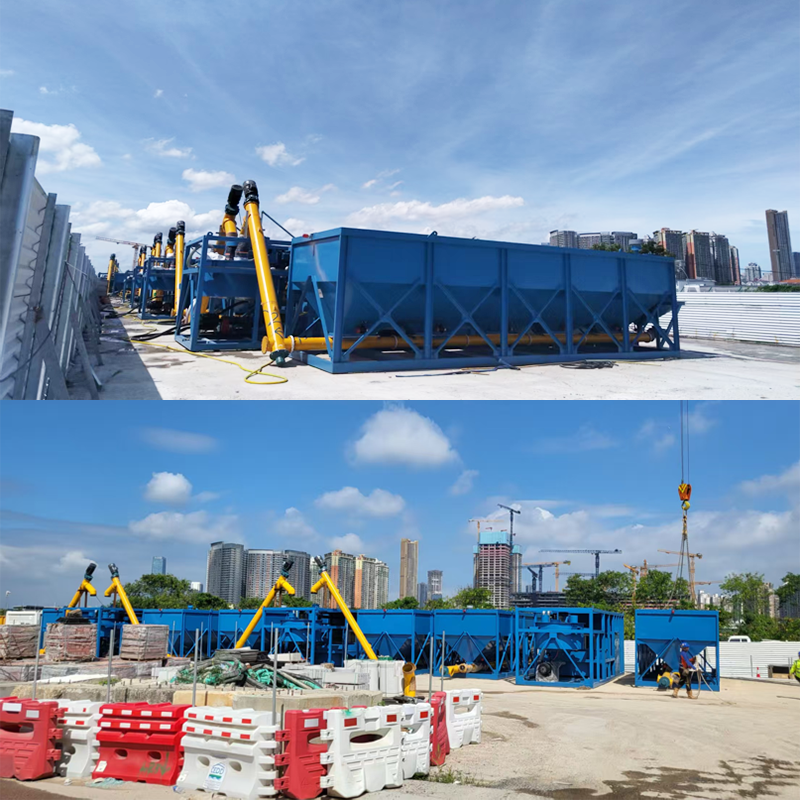
The Lok Ma Chau Loop is a development site in an ecologically sensitive area on the boundary between Hong Kong and Shenzhen. Projects in this position carry a different burden from an ordinary urban site: the ground treatment itself has to be demonstrable, because the environmental and structural consequences are both scrutinised and both permanent.
Project overview
The scope was precision soil stabilisation and foundation reinforcement in an eco-sensitive border zone. Precision here is not marketing language — it describes a treatment where the delivered binder content, depth and uniformity all have to sit inside specified limits, and where over-treatment is as much of a concern as under-treatment.
The technical challenge: full data traceability
The governing requirement was 100% construction data traceability. The project demanded strict adherence to the RSS (Real-time System for Site Management) digital audit, which means every aspect of the works had to be captured, time-stamped and retrievable rather than reconstructed from shift paperwork afterwards.
For a grouting package this is a demanding requirement. It is not enough to record that a batch was mixed; the record has to tie a specific volume, a specific mix, a specific pressure and flow history and a specific location together, in a form an auditor can follow. Manual records cannot meet that standard at volume, and records generated separately from the control system can always be questioned.
How it was met
The plants supplied to the site integrated EIZOO Smart PLC Monitoring with encrypted data logging, generating tamper-proof grouting reports in real time. Because the data originates in the control system that is actually batching and pumping, the report is a by-product of the work rather than a parallel manual exercise — which is what makes it defensible in an audit.
The result was full compliance with Hong Kong CEDD and RSS audit standards, with total transparency across environmental safety and structural integrity. The practical benefit for the contractor was that compliance evidence existed continuously, instead of being assembled under time pressure at handover.
What this means for similar projects
| Requirement | Implication for the plant | Common gap |
|---|---|---|
| Real-time data capture | Instrumentation integrated with the control system | Data logged by a separate device after the fact |
| Tamper-proof records | Encrypted logging and secure export | Editable spreadsheets |
| Precision dosing | Weighing and metering accuracy verified by the record | Volumetric dosing with assumed accuracy |
| Audit traceability | Every batch tied to location, time and parameters | Shift summaries that cannot be reconciled |
| Environmental assurance | Over-treatment and spill detectable in the data | No record to demonstrate containment |
The recurring lesson from projects run under a digital audit is that traceability has to be designed into the plant. Added afterwards, it produces records that are expensive to generate and easy to challenge.
Related reading
For the underlying equipment decisions, see why pressure and flow printout improves grouting QA/QC, the W/C ratio, flow and pressure printout checklist, and how much automation a cement grout plant actually needs.
Frequently asked questions
What is the RSS digital audit?
The Real-time System for Site Management is a Hong Kong framework that requires construction activities to be captured and reported digitally as they happen, rather than reconstructed from paperwork. On this project it set the standard for what the grouting records had to contain.
Why is encrypted logging important rather than ordinary logging?
Because a record that can be edited is a record that can be challenged. Encryption and controlled export are what make a compliance record defensible when someone audits it months later.
Does real-time reporting slow the work down?
It should not, if it is generated by the control system itself. The slowdown comes from parallel manual record keeping, which is exactly what an integrated system removes.
Is this level of traceability only required on public works?
Public digital-audit frameworks have driven adoption, but private developers increasingly ask for the same records because they reduce dispute risk at handover.