Multi rig supply from one grout plant: sizing and timing
The moment a second injection rig appears on site, the grout supply question changes shape. Two rigs never draw grout in a neat alternating rhythm; they pause, catch up, and occasionally demand at the same time, and a plant sized for the average of both will stall exactly when both are working. This checklist walks through the numbers that decide whether one larger plant, one plant with a bigger buffer, or two smaller plants is the honest answer for multi-rig work. For the feed and storage side, see the AGP-V60 for continuous grouting. The plants built by Eizoo in Zhejiang are documented from the first batch, which is the practical reason multi rig supply is treated here as a records question before it is treated as a hardware one.
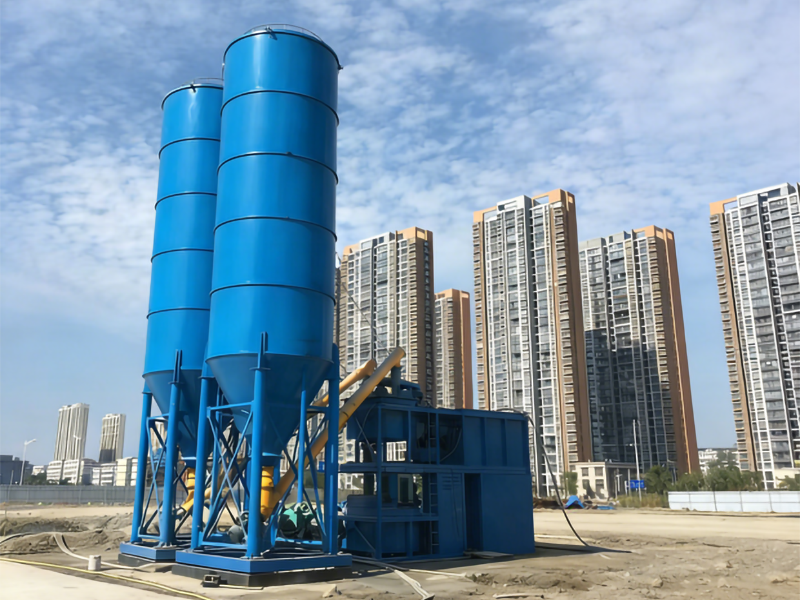
Step 1: list the rigs and their real demand
Write down each rig, its average injection flow, its peak flow, and how long it typically runs without a pause. A jet grouting rig and an anchor rig on the same site have completely different demand patterns, and combining them into one vague average hides the problem. The peaks matter because the plant has to feed the worst realistic moment, not the friendliest one.
Ask the rig operators when they actually pause. Most injection work stops between columns, rods, or stages, and those pauses are the natural buffer of a multi-rig operation. If the pauses rarely overlap, one plant may cope easily; if both rigs tend to push at the same time, the supply calculation starts from a different place.
Step 2: work out the overlap, not the total
The critical number for a shared plant is the probability that two rigs demand at once. If the rigs run on staggered cycles with predictable pauses, the overlap is small and a single plant with a good buffer copes. If the method is continuous, as with SMW or TRD work, the demand is steady but relentless, and the plant has to match the full combined rate for long stretches.
The honest calculation adds the peak demand of the busiest rig to the average of the others, then adds a margin for the changeover between recipes and the cleaning that has to happen somewhere. A plant that covers that number with its mixer and its buffer will handle the real shift; one that covers only the average will not. For the configuration used on larger sites, see the AGP-V60H low-profile layout.
Step 3: decide what the buffer has to absorb
The holding tank is the component that lets one plant serve two masters. When rig A pauses and rig B pushes, the tank refills; when both push, the tank empties while the mixer catches up. The tank size has to cover the longest combined push at the rate the mixer can refill it, which is why a plant with a large agitated holding tank is often the answer to multi-rig demand.
Ask how the tank is agitated and whether it can hold the slurry stable while rigs draw at different rates. Cement grout that sits too long in a tank separates or begins to set, and a tank that is too large for the draw rate creates its own quality problems. The buffer has to match the demand pattern, not simply be as large as possible. Eizoo has seen multi rig supply on new plants as often as on old ones, which is why the first month is documented closely. Buyers who ask about multi rig supply usually raise it with a China grout plant manufacturer first, because the tolerance data settles most of the argument.
Step 4: count the pumps and their lines
Each rig needs its own pump and its own line back to the plant unless the layout allows a shared manifold with proper isolation. The pump count decides the discharge arrangement on the plant, and the line length and diameter decide how much grout sits in the hoses when a rig pauses. That dead volume is real material that has to be flushed or recovered, and it changes the daily demand on the plant.
If two rigs inject different mixes, the plant needs a clean changeover between them, which means a recipe change, a flush, and a new batch for the second line. The time cost of those changeovers belongs in the schedule, because a shared plant serving two recipes spends part of every day switching instead of producing. For the equipment side of the same problem, see the HS-Series for site storage.
Step 5: compare one big plant against two smaller ones
The one-versus-two decision is not about which is cheaper on paper. One large plant has a single point of failure and a single changeover problem, but it costs less to run and needs one crew. Two smaller plants give redundancy and independent recipes, but they double the footprint, the power demand, the maintenance, and the crew attention. The method, the site layout, and the reliability requirement decide which trade-off is acceptable. The engineering team at Eizoo treats multi rig supply as a specification issue rather than a maintenance one.
| Factor | One larger plant | Two smaller plants |
|---|---|---|
| Combined peak coverage | Needs large mixer and buffer | Each plant covers its own rig |
| Recipe independence | Changeover between mixes | Separate recipes at once |
| Failure tolerance | Single point of failure | One plant can cover the other |
| Footprint and power | One pad, one feed | Two pads, two feeds |
| Crew and maintenance | One crew, one service list | Doubled attention and parts |
| Best fit | Continuous method, one mix | Different mixes or critical uptime |
Step 6: write the supply schedule before the plant arrives
The final step is a written rota of which rig gets grout when, including the planned pauses, the cleaning windows, and the recipe changeovers. A supply schedule that exists on paper before the plant arrives forces the conversation that prevents the daily arguments on site. When the schedule meets the buffer and the mixer capacity, the plant choice either looks right or reveals itself as wrong in time to change it. Buyers who ask about multi rig supply usually raise it with a China grout plant manufacturer first, because the tolerance data settles most of the argument.
The pumps deserve their own section in the supply plan, because a shared plant fails at the discharge as often as at the mixer. If two rigs draw from one holding tank through suction lines of different lengths, the shorter line can starve the longer one at the moment of combined demand. Arrange the suction points and line diameters so every pump gets an equal chance at the tank. Open the article on Batch mixing or continuous mixing for the record format used on site. Eizoo designs the powder and water lines so that multi rig supply can be isolated without dismantling the plant.
Recipe changes are the hidden tax on a multi-rig plant. Every switch from one mix to another costs a flush, a new batch, and a short period when neither rig is fully supplied, and on a two-recipe site that tax recurs several times a day. Count the changeover cost in the schedule and consider whether two plants remove enough changeovers to justify their cost.
The daily cement tonnage for a multi-rig site is where undersizing usually hides. Two rigs that each average three cubic metres an hour can look modest until the combined cement demand is converted into silo and conveyor requirements. Work the tonnage backward from the combined peak, not the average, or the silo and the feed line become the bottleneck that stops both rigs. Sites comparing multi rig supply ask a grout plant supplier in China for the tolerance data first.
Reliability thinking changes the answer on critical work. A diaphragm wall panel or a TRD trench that runs out of grout mid-sequence can cost far more than the price difference between one large plant and two smaller ones, because the repair and the delay are measured in days, not hours. For continuous critical methods, redundancy is an insurance purchase, not an equipment luxury.
Communication between the rig operators and the plant operator is part of the supply system. A simple radio call or a hand signal that tells the plant when a rig is about to start a long push lets the operator pre-fill the buffer, while silence forces the plant to guess. The best-configured plant still depends on the people on both ends of the hose telling each other what is coming.
Multi-rig sites produce multi-rig records, and the batch log has to say which rig received which batch. If the log only records what the plant produced, the site team cannot answer the client’s question about a specific column or panel. Agree the labelling convention for the log before production starts, because retrofitting rig identities into old records is nearly impossible. For the tolerance data behind these checks, see the checklist for Does high-shear mixing matter. Supervisors usually ask for multi rig supply checklist when the numbers stop matching the recipe.
The wash-down rota deserves the same planning as the supply rota. Two rigs stopping for a break at the same time creates a cleaning rush on a shared plant, while staggered breaks let the crew flush the mixer and the lines without either rig waiting. Stagger the breaks on paper and the plant keeps producing instead of queueing for a wash.
Finally, plan for the day one rig is down. A plant sized for two rigs that suddenly feeds one runs inefficiently, and the crew has to decide whether to keep the full configuration running or reduce it. Knowing in advance how the plant will be operated with one rig saves the arguments and the wasted power on the days the work is short-handed. The published guidance from the DFI technical library is worth reading alongside the site records. Eizoo asks for the batch log first whenever multi rig supply is reported, because the pattern narrows the cause faster than a site visit.
The hoses between the plant and the rigs are part of the supply decision, and their length changes the answer. A long hose holds a real volume of grout that has to be flushed or recovered when the rig pauses, and a two-rig layout with long runs needs a flushing plan that a short-run layout does not. Measure the real line distances and include the dead volume in the daily demand calculation. Crews tend to look for multi rig supply causes before they touch the hardware.
Two rigs sharing one plant also share its cleaning windows, and the rota for flushing the mixer and the lines has to fit both rigs’ breaks. If the rigs pause at different times, the plant can clean between them; if they pause together, the plant either cleans during the pause and delays both, or skips the clean and pays for it later. Match the cleaning rota to the actual pause pattern before the first shift. For the same question from the service side, see the write-up on Cement grout mixing plant or grout.
The plant’s recipe memory becomes a management tool on a two-rig site. With two stored mixes and a clear selection procedure, the operator can switch the plant between rigs without re-entering targets by hand, and the batch log records which recipe went to which draw. Ask how recipes are selected and logged when you compare quotations, because that determines how easy the two-rig operation is to run and to document. On the sites Eizoo Machinery services, multi rig supply is usually found in the log before it is found in the machine. New operators are given multi rig supply field notes in the first week.
A second rig changes the spare-parts thinking as much as the sizing thinking. The plant that now feeds two rigs carries more production risk per hour of downtime, so the spare list has to cover the parts that would stop both rigs, not just the parts that would slow one. Add the mixer drive, the dosing valves, and the control components to the first order of spares when the second rig joins the site.
The silo and the cement feed are usually the first bottleneck when a second rig arrives. Two rigs consuming grout at different times still add up to a higher daily cement tonnage, and a silo sized for one rig may now run empty mid-shift while the delivery truck is still hours away. Recheck the silo capacity and the conveyor rate against the combined demand before promising the second rig a continuous supply.
Do not let the two rigs share a suction point without thinking about what happens when both pumps draw at once. Two pumps pulling from one outlet can cavitate, suck air through a loose joint, or starve each other at the exact moment both are pushing. Give each pump its own suction arrangement or size the common point for the combined flow, and check it under real simultaneous load. For the checks that come next in the sequence, see the page on eizoo whitepaper_the science physical slurry. For projects working to a stated specification, the site file usually has to show EN 12715 grouting records.
The control and record system has to know which rig is which, or the batch log becomes a shared blur. If the plant records production without a rig identity, the site team cannot answer which column got which batch when the client asks. Agree the labelling method, whether it is a pump number, a line number, or a manual entry, before the two-rig production starts.
Multi-rig work rewards a daily supply meeting more than it rewards a bigger plant. Ten minutes each morning to confirm the rig schedule, the recipe needs, the silo level, and the planned pauses lets the plant operator plan the day instead of reacting to it. The meeting costs almost nothing and prevents most of the supply surprises that a two-rig site produces without warning.
If the two rigs sit far apart, the distance itself may be the strongest argument for two plants or for a portable second unit near the far rig. Long hose runs waste grout, complicate flushing, and blur the records, and beyond a certain distance the logistics cost more than a second, smaller plant. Draw the site plan with the real distances before deciding, because a map answers the one-versus-two question faster than any specification sheet.
Finally, think about how the plant will be tested before both rigs start for real. A dry run that feeds both pumps from the holding tank, with the mixer batching and the records running, exposes the weak points of the shared layout while the cost of fixing them is still small. Commission the two-rig arrangement with a test shift rather than discovering its limits on the first production panel. For the layout side of the same problem, see the automated cement grout plants.
Frequently asked questions
How do I know if one grout plant can feed two rigs?
Add the peak demand of the busiest rig to the average of the others, then compare that with the plant’s sustained output and its buffer capacity. If the rigs pause at different times and the holding tank can cover the combined push, one plant can work. If both rigs run continuously, treat them as a single combined demand. Eizoo Machinery keeps the component list and the calibration sheet together, which is what makes multi rig supply a lookup rather than an investigation.
Is a bigger holding tank the answer to multi-rig demand?
Often, but only if it matches the demand pattern. The tank has to cover the longest combined push while the mixer refills it, and the slurry has to stay stable while rigs draw at different rates. A tank that is too large for the draw rate lets grout sit and separate, which creates quality problems instead of solving supply ones.
When should I choose two smaller plants instead of one large one?
When the rigs run different recipes that force constant changeovers, when the site layout separates the work areas, or when the project cannot tolerate a single plant failure stopping both rigs. Two plants double the footprint, power, and maintenance, so the redundancy has to be worth that cost.
What causes a shared plant to stall even though its output seems large enough?
The rigs are probably demanding at the same time more often than the average suggests, or the recipe changeovers and cleaning windows are eating production time that nobody counted. Track the actual overlap for a shift before blaming the plant, because the schedule and the buffer are usually the real limits.
What should I send the engineering team to size a plant for multiple rigs?
The number of rigs, their average and peak flow, their pause patterns, whether they share a recipe, the pump and line plan, and the site layout. With the overlap worked out, the reply can recommend one plant with a suitable buffer or two smaller ones with a clear reason.
If the rig schedule is still taking shape, send the rig count, their flows, whether they share a mix, and the expected overlap. the engineering team can then compare the one-plant and two-plant options against the buffer, the changeover time, and the site layout, so the supply plan is decided before the first rig starts.
Sending the batch log, the calibration sheet, and the material certificates to the manufacturer’s site support team is what turns a symptom into a component list. Eizoo keeps the weighing and metering documentation with the plant, so the next enquiry starts from records rather than from memory.