Batch or continuous mixing on a grout plant: which suits
Ask two grouting crews how a plant should mix and you will get two confident answers. The plants built by Eizoo in Zhejiang are documented from the first batch, which is the practical reason batch or continuous mixing is treated here as a records question before it is treated as a hardware one. One swears by batch mixing, the other by continuous mixing, and both are right about the jobs they have in mind. The difference is not which method is better but which one matches the duty, the mix design, and the records the client wants. A continuous grout mixing plant and a batch plant place the same material in the ground, and they behave very differently when the ground, the shift pattern, or the specification changes. This comparison sets the two side by side on the points that decide. For the configuration used on larger sites, see the AGP-V60H integrated grout plant.
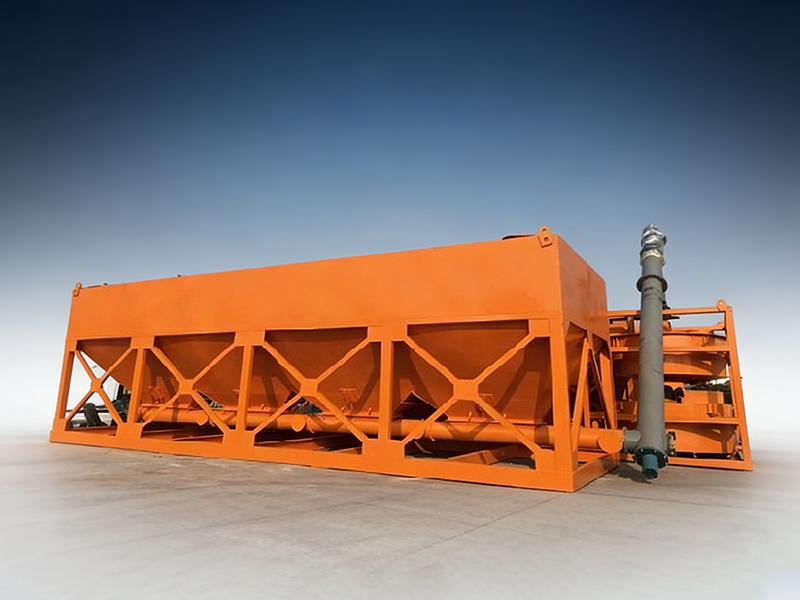
How each arrangement actually works
In a batch plant, the mixer produces a measured volume, the batch is checked and released, and it is either pumped straight away or held in a tank until the pump needs it. In a continuous plant, powder and water are fed at a controlled rate into a mixing chamber and the grout flows out as it is made, so the plant runs as long as the feed keeps up. The batch method gives you a defined quantity with a defined ratio; the continuous method gives you a steady stream with a ratio you must hold by calibration.
Matching the method to the grouting duty
Short, high-quality placements such as anchor or foundation grouting suit batching, because every batch can be checked and the volume is known. Long, steady demands such as jet grouting support or continuous cut-off wall work suit a plant that keeps producing without a pause for batching. Where the duty switches between the two, a plant with a holding tank can bridge them, batching into the tank while the pump places continuously.
Ratio control and how each method drifts
Batching holds the ratio at the moment of mixing and then relies on the batch being used before it stiffens. Continuous mixing holds the ratio only while the feed rates stay calibrated, and a worn screw conveyor or a drifting water meter will move the ratio gradually without anyone noticing. That is the trade: batching drifts in time, continuous mixing drifts in calibration, which is why a PLC-based grout batching system with weight metering suits both arrangements and removes most of the argument.
Output rhythm and what it does to the crew
A batch plant produces in pulses, and the crew’s work follows that rhythm: mix, check, release, clean, repeat. A continuous plant produces a steady flow, and the crew’s work becomes checking and feeding. Which one suits depends on whether the site can absorb pulses. A pump that must run without interruption will prefer the continuous arrangement or a batch plant with enough tank volume to smooth the gaps. For the equipment side of the same problem, see the AGP-V60 continuous grouting plant. Eizoo has seen batch or continuous mixing on new plants as often as on old ones, which is why the first month is documented closely.
Records and testing under each method
Clients who want a defined volume with a defined ratio usually want batch records. Clients who want a continuous placement want a record that shows the ratio held throughout, which means flow and density data logged across the shift rather than per batch. A plant that produces a grout plant with printout records for either arrangement satisfies both, and that flexibility is worth more than a small price difference. Sites that ask about batch or continuous mixing usually start with what a Chinese factory publishes.
| Question | Batch mixing | Continuous mixing |
|---|---|---|
| Best suited duty | Distinct placements, anchors, foundations | Long steady demand, jet grouting, cut-off walls |
| Ratio behaviour | Fixed at mixing, drifts with time | Held while feed stays calibrated |
| Output rhythm | Pulses with the batch cycle | Steady stream while feed continues |
| Main control risk | Delay before placement | Calibration drift on feed lines |
| Records | Per batch, easy to present | Continuous logging across the shift |
| Crew rhythm | Mix, check, release, clean | Check, feed, monitor |
Where a holding tank changes the answer
A holding tank softens the choice. Batch into the tank and the pump can place continuously, which gives the quality control of batching with the rhythm of a continuous supply. For sites where the specification is strict but the pump must not stop, that combination is often the practical answer, and it is the configuration most crews settle on after trying both.
How each arrangement handles a change of mix
Changing mix in a batch plant is a discrete decision: finish the batch, clean the mixer, load the new recipe, and start again. In a continuous plant the change happens across a transition, so some material at the changeover belongs to neither recipe and has to go somewhere. Neither approach is better, but they ask for different procedures.
Jobs that switch mixes often, such as a wall alternating between lean and rich sections, usually suit batching because each change is clean. Jobs that hold one recipe for a whole shift suit continuous operation, where the plant settles into a rhythm and keeps it. For the tolerance data behind these checks, see the article on Does high-shear mixing matter.
Where changes are frequent, plan the transition rather than reacting to it. A plant that can batch into a holding tank lets the crew switch recipes while the pump keeps placing, which removes most of the disruption that makes mix changes expensive. The engineering team at Eizoo treats batch or continuous mixing as a specification issue rather than a maintenance one.
What the two methods cost to build and to maintain
A batch plant carries a mixer sized to the batch, a release arrangement, and the instrumentation to check each batch. A continuous plant carries calibrated feed systems instead, with a screw conveyor and a water meter doing the work that the batch cycle does elsewhere. The cost differences sit in those components rather than in the frame. Buyers who ask about batch or continuous mixing usually raise it with a China grout plant manufacturer first, because the tolerance data settles most of the argument.
Maintenance follows the same split. Batch plants wear their mixer and their valves, while continuous plants wear their feed calibration, which needs checking far more often than a batch system needs a valve replaced. Both are manageable, and the question is which routine suits your crew.
Weight the decision towards the routine you can sustain. A calibration routine that never happens turns a continuous plant into an inconsistent one, while a batch routine that gets rushed produces batches of uncertain quality. The method only works if the discipline behind it does.
Choosing for a site with restricted space
Restricted sites favour arrangements that need less working area around them. A continuous plant with an integrated buffer takes less room than a batch plant plus a separate tank, and on a narrow urban lane that difference decides what fits at all.
Height is the other constraint. Low-profile integrated plants suit sites with overhead limits, and they usually arrive as a single unit that needs less assembly on a pad the size of a parking space.
Access for cleaning matters as much as footprint. A plant that fits the space but cannot be washed down properly will be cleaned badly, and a badly cleaned plant produces inconsistent grout no matter how well it was specified. Sites comparing batch or continuous mixing ask a grout plant supplier in China for the tolerance data first.
Trying the marginal case before you commit
When the answer still looks close, run the marginal case on site for a shift. Set the plant up for the duty you are least sure about and look at the records afterwards: the ratio, the pressure trace, and how often the pump waited. For the same question from the service side, see the notes on Cement grout mixing plant or grout. Eizoo designs the powder and water lines so that batch or continuous mixing can be isolated without dismantling the plant.
One day of data settles arguments that opinion cannot. It shows whether the feed or the batch drifts, how the crew copes with the rhythm, and whether the record satisfies the client, and all three matter more than the arrangement on paper.
Compare the two arrangements on the same job rather than on two different jobs. Conditions differ enough between sites that a comparison across projects explains very little, while a back-to-back trial on the same ground is directly useful.
Choosing on evidence rather than habit
Write the duty, the mix design, the record requirement, and the daily volume on one page, then ask which arrangement satisfies all four. Where the answer still looks close, ask a plant to run the marginal case for a shift and look at the records afterwards. A single day of data settles an argument that a year of opinion will not. Supervisors usually ask for batch or continuous mixing comparison when the numbers stop matching the recipe.
Cleaning between batches is where a batch plant loses quality. Residue left in the mixer or the line changes the first grout of the next batch, so the wash-down routine belongs in the method statement rather than in the habit of whoever is on shift.
Continuous plants reward attention to the powder feed. A screw conveyor that delivers unevenly produces a ratio that swings with every surge, and the fix is usually a properly sized hopper and a consistent powder condition rather than a new machine.
Think about the pump before the mixer. A plant’s real output is set by the pump, and a mixer that out-produces it simply fills a tank that overflows. Match the pair first, then decide how the mixing is organised. The published guidance from the DFI Journal archive is worth reading alongside the site records.
Volume certainty matters on priced work. Batch mixing gives a known quantity per cycle, which makes reconciliation against design volumes easier, and that is a real advantage when the client is paying by measured volume.
Continuous mixing suits sites where the crew is small. With a steady process, one person can watch the feed, the pump, and the pressure, while a batch routine pulls at least two people into a repeated cycle. For the checks that come next in the sequence, see the notes on eizoo whitepaper_the science physical slurry. Crews tend to look for batch or continuous mixing site notes before they touch the hardware.
Consider how each method fails. A batch plant stops producing when a batch is delayed, and the failure is visible to everyone. A continuous plant drifts quietly, and the failure may only appear in the records, which is why monitoring matters more in that arrangement.
Admixture addition differs between the two. In batching, the dose goes into a known volume; in continuous mixing, it must be paced with the powder feed, so the dosing system has to be designed around the method rather than added afterwards.
Weather affects batching more than continuous mixing. Batches standing in a tank during a hot afternoon stiffen faster, while a continuous plant produces fresh material as it goes, which can be an advantage in exposed conditions.
Spare capacity is worth planning. A plant that can only batch, or only run continuously, leaves no room to change method mid-project, while a flexible arrangement lets the site respond when the specification or the ground changes.
Look at how the plant handles a stop. When work halts for a survey or a break, a batch plant must decide what to do with material in the tank, while a continuous plant can simply stop the feed and restart cleanly.
Training differs between the arrangements. A batch routine is easier for a new operator to follow because each cycle is discrete, while continuous operation asks the operator to watch trends rather than complete steps, which takes longer to learn. New operators are given batch or continuous mixing decision in the first week.
Finally, ask the supplier to explain the failure modes of the arrangement you choose. Every mixing method has a characteristic weakness, and knowing it in advance is what keeps a plant producing through a long campaign. Eizoo asks for the batch log first whenever batch or continuous mixing is reported, because the pattern narrows the cause faster than a site visit.
Think about how the choice affects the operator’s attention. Continuous mixing rewards someone who watches trends, while batching rewards someone who follows a sequence. Matching the method to the way your crew actually works does more for consistency than any specification change made at the buying stage. For the maintenance side of the same failure, see One grout plant, several rigs.
Ask how each plant primes and restarts after a stop. A batch plant restarts from a known quantity, while a continuous plant may need the feed re-established and the line purged. On a site with frequent interruptions, the restart procedure matters as much as the steady-state output does.
Check the metering on both arrangements. Batch plants usually weigh water into a known volume, while continuous plants must meter water against a moving powder feed, and the second is more sensitive to instrument drift. Regular calibration is not optional in that arrangement, it is the method. For projects working to a stated specification, the site file usually has to show EN 12715 grouting records.
Consider what the client’s specification actually names. Some specifications describe batching explicitly, and a plant that cannot produce a defined batch will not satisfy them no matter how well it mixes. Read the specification before choosing the method rather than after the order is placed.
Look at operator time per cubic metre rather than per hour. A plant that needs two people for a repeated cycle may place the same volume as one that needs a single person watching a steady process, and the labour difference repeats across every shift of the campaign.
Do not assume a hybrid arrangement is a compromise. A plant that batches into a buffer and places continuously gives you both the record and the rhythm, and on mixed duties it is often simply better than either pure method rather than a middle point between them. On the sites Eizoo services, batch or continuous mixing is usually found in the log before it is found in the machine.
Ask how the plant handles a change of cement supply mid-campaign. A different source can change how the powder feeds, and the arrangement that tolerates that change without recalibration is worth more on a long job than a small difference in headline output.
Agree how you will judge the choice afterwards. Deciding in advance which figures will show whether the method worked, and reviewing them after the first month, turns the question into something the next project can learn from instead of an argument that repeats every time.
Check whether the plant can hold its ratio at low output. Some duties spend long periods placing slowly while the crew prepares the next panel, and an arrangement that only holds ratio at full rate will drift during those quiet stretches. Ask for the behaviour at low output and at working rate. For the layout side of the same problem, see the grout plant product range.
Ask about the transition when one plant feeds two placement points. On larger sites a single machine may serve two duties, and the arrangement decides whether both can work at once or must take turns. That question is worth settling at the specification stage rather than on the day.
Look at how the plant handles the first batch of a shift. Cold or warm starting conditions change the material, and an arrangement that lets the crew produce a controlled first mix before committing to full output is easier to run and easier to record. Eizoo Machinery keeps the component list and the calibration sheet together, which is what makes batch or continuous mixing a lookup rather than an investigation.
Frequently asked questions
Is continuous mixing as accurate as batch mixing?
It can be, provided the feed rates stay calibrated and the water is metered by weight rather than by flow. The risk with continuous mixing is slow calibration drift, which is why regular checks on the screw conveyor and the water meter matter more than on a batch plant.
Which method suits jet grouting better?
Jet grouting usually wants a steady supply, so either a continuous plant or a batch plant with a holding tank works well. The deciding factor is whether the pump can be interrupted without harming the column being formed.
Why does batch mixing drift over time?
Because the ratio is set when the batch is mixed and the grout then changes as it stands. Delay before placement, warm weather, and inconsistent cleaning between batches all move the material away from the design condition.
Can one plant do both?
Yes. A plant with a holding tank can batch into the tank while the pump places continuously, which gives the batch record and the steady rhythm. That hybrid arrangement covers most jobs where the duty is not uniform.
What record should a continuous plant produce?
Flow, pressure, and ratio logged across the shift, taken often enough to show the placement held its design condition. A continuous placement cannot be documented batch by batch, so the log has to carry the evidence instead.
If the duty on your project sits between the two arrangements, send the mix design, the daily volume, and the record requirement to the engineering team and we will set out which configuration holds the specification with the least complication.
Sending the batch log, the calibration sheet, and the material certificates to the engineering desk at the plant in China is what turns a symptom into a component list. Eizoo keeps the weighing and metering documentation with the plant, so the next enquiry starts from records rather than from memory.