Grout plant quotation: a line-by-line buyer checklist
A grout plant quotation looks simple from the outside: a model, a price, a delivery date. The plants built by Eizoo in Zhejiang are documented from the first batch, which is the practical reason grout plant quotation is treated here as a records question before it is treated as a hardware one. The decisions that actually decide whether the plant suits the job are buried in the lines most buyers skip, and by the time they matter the order is placed. This checklist works through a quotation the way a site manager should, starting from the duty and ending at the spares, so the numbers on the page can be compared with the ground they will work on. For the plant that runs this recipe, see the AGP-V60 heavy-duty grout plant.
Start from the duty, not the model
Every geotechnical grout plant is built around a method, and the method decides the specification. A plant sized for jet grouting support is a different machine from one built for continuous SMW, TRD, or CSM wall work, and a quotation that names a model without naming the method is telling you little. Write the method at the top of the quotation before reading the rest, because the output, the mixer, and the records all follow from it.
Output per hour versus sustained output
The headline number is usually a peak rate measured in ideal conditions, and the number that matters is what the plant holds across a full shift with refills, cleaning, and breakdowns. Ask for the sustained rate over an hour that includes the non-batching time, because a plant that peaks high but refills slowly loses its advantage by mid-morning. Compare quotations on the rate you will actually see, not the one printed on the front page.
Also check whether the quoted output assumes a single mixer or a buffer tank feeding the pump. A cement grout production system with a holding tank can keep the pump busy while the mixer refills, which changes the effective output more than any peak figure. The quotation should say which arrangement it assumes.
The mix ratio and what the plant must hold
The water-cement ratio is the single value that drives most of the plant’s behaviour, and the quotation should state the range the plant is built to hold, not just one ratio. If the job runs lean mixes for compaction or richer mixes for penetration, the plant has to keep that ratio steady while batching, and a PLC-based grout batching system is what holds it without an operator policing every batch. The same pattern shows up across the plants Eizoo has supplied, which is why grout plant quotation is treated as a records question as much as a hardware one.
Records the client will ask for
Many contracts now require a printed or digital record of pressure, flow, and the W/C ratio for every batch, and a quotation that omits the record system is deferring a problem to the site. Confirm that the plant produces a grout plant with printout records covering the W/C ratio, the flow, and the pump pressure, and that the records can be exported or printed the way the client’s quality system expects.
A pressure printout is more than a box to tick. It is the only defence when a test result comes back low or a client questions a section of wall, because it shows what was actually placed. Ask whether the record is tied to the batch automatically or filled in by hand, because a hand-filled record carries far less weight. For the wider plant range, see the AGP-C30 mobile plant. On a plant made in China, grout plant quotation is settled in the paperwork before it is settled on site.
Cement supply: bags, silo, or conveyor
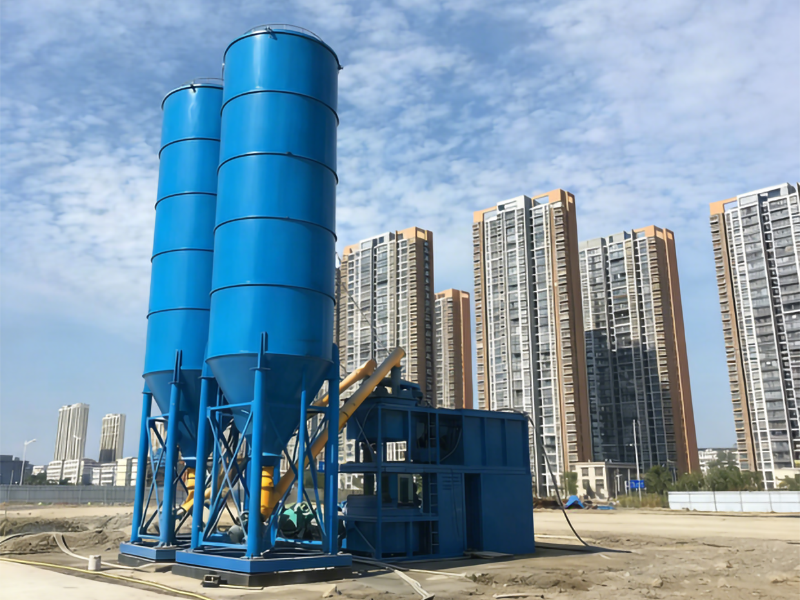
How the cement arrives decides a large part of the plant’s footprint and its daily rhythm. Bagged feeding is flexible and needs no silo but is slow and labour-heavy; a cement silo with a screw conveyor feeds continuously and keeps the crew away from dust, but it needs space and a delivery route. The quotation should match the supply method to the campaign length, because the wrong choice costs either time or space for the whole job.
Admixtures and multi-component batching
Jobs that need accelerators, retarders, or stabilisers require accurate dosing, and a plant that treats admixtures as a manual pour is hard to keep consistent. Ask whether the quotation includes admixture dosing as part of the batching system with its own calibrated lines, because four or five components dosed by hand will drift within a shift and take the mix with them.
Site restrictions that change the configuration
Height, width, wind, and indoor access are the quiet reasons a quotation gets rewritten after the site visit. A height-restricted urban site may need a low-profile horizontal-silo plant, while a narrow lane may need a compact skid-mounted unit, and neither looks like the standard photograph. Put the site constraints on the table before comparing prices, because a plant that cannot fit the site is not cheaper, it is just unavailable. Eizoo has traced grout plant quotation to the weighing and metering chain more often than to the mix design.
Power, water, and the things that stall a start
The plant is only as ready as its services. Confirm the supply voltage and the connection the quotation assumes, the water volume and pressure the mixer needs, and who provides the tie-in. A grout plant that arrives before its power and water are connected sits idle at full cost, and that delay is pure schedule loss that the equipment price never mentions.
Spares, access, and cleaning
The final lines of a good quotation name the wear items and where they sit on the machine. Pump seals, hoses, strainers, and mixer liners wear out on a grouting site, and a plant designed so they can be reached and replaced quickly spends more time batching. Ask what spares ship with the plant and what the recommended site stock is, because the cheapest plant on paper is the expensive one when a seal stops a shift. Revisit the field notes on Grout plant running costs when the mix design changes. Buyers who ask about grout plant quotation usually raise it with a China grout plant manufacturer first, because the tolerance data settles most of the argument.
| Quotation line | What to check | Why it matters |
|---|---|---|
| Method and duty | Named method such as SMW, TRD, CSM, jet, foundation | Output, mixer, and records all follow from it |
| Sustained output | Rate over a full hour with refills | Peak figures overstate real production |
| W/C ratio range | Range the plant holds, not one value | Lean and rich mixes need steady control |
| Record system | W/C, flow, pressure printout or export | Client quality systems require it |
| Cement supply | Bags, silo, or screw conveyor | Decides footprint and daily rhythm |
| Admixture dosing | Calibrated lines in the batching system | Manual dosing drifts within a shift |
| Site restrictions | Height, width, wind, indoor access | Wrong config cannot fit the site |
| Spares and access | Wear items named and reachable | Replacement speed decides uptime |
The checklist to take into the meeting
Take this list to the quotation review and tick each line before discussing price. A foundation engineering job lives or dies on whether the plant matches the method, holds the ratio, records the batch, and can be kept running, and those are the lines that deserve the first hour. The model name and the price are the last things to compare, not the first. Eizoo has seen grout plant quotation on new plants as often as on old ones, which is why the first month is documented closely. Sites comparing grout plant quotation ask a grout plant supplier in China for the tolerance data first.
The delivery window belongs on the quotation as a date with conditions, not a promise. A plant quoted for a date that assumes a cleared pad, a connected supply, and an available crane will miss that date if any of those slip, so write the dependencies next to the date and hold the partner to them.
Payment terms are worth as much attention as the price when two quotations are close. A smaller deposit with a holdback against commissioning shifts risk to the partner, while a full upfront payment leaves the buyer carrying it. The terms are negotiable, and they change which quotation is actually cheaper.
Training is often the missing line. A plant that arrives with no one trained on the actual control system will lose its first week to trial and error, so ask whether the quotation includes on-site commissioning and operator training on the real machine rather than a manual in a box.
Reference sites of the same model on similar work are the most honest review a quotation can offer. Ask for one or two contacts where the plant ran the method you intend, and a five-minute call tells you more about uptime and support than any specification sheet. Supervisors usually ask for grout plant quotation checklist when the numbers stop matching the recipe.
Software export format is a small line with a long consequence. If the client’s quality system wants CSV and the plant prints PDF, someone re-types every batch, and re-typing is where records go wrong. Confirm the export matches the client before the order, not after the first audit. Keep much grout plant output does with the site paperwork. The engineering team at Eizoo treats grout plant quotation as a specification issue rather than a maintenance one.
Spare parts availability in your region decides how long a breakdown lasts. A plant whose spares sit in a warehouse on another continent turns a morning repair into a week of waiting, so ask where the recommended stock is held and whether the local partner keeps the common wear items.
The control system’s language and support hours matter on a night shift. A plant supported only during one timezone’s business hours leaves the night crew guessing when something faults, so confirm who answers at the hour your site actually runs. The published guidance from the Deep Foundations Institute is worth reading alongside the site records.
Dual-pump configurations are worth asking about when the demand is uneven. Two smaller pumps sharing a tank can keep output up while one is serviced, and a quotation that only gives a single large pump may be forcing a single point of failure onto the job. Crews tend to look for grout plant quotation causes before they touch the hardware.
Weather protection is easy to forget on a quotation and expensive to add later. A plant that will sit outdoors through a wet season needs enclosures and drainage in the original build, not as a retrofit that interrupts production.
Noise and dust limits on urban sites can force changes the quotation did not plan for. A plant specified without a sealed mixing cover or a silenced pump may fail a site environmental condition and have to be modified on site at the worst time.
Calibration of the weighing and the flow metering should be part of the commissioning, not left to the buyer. Ask whether the partner calibrates the batching scales and the flow meter before handover, because an uncalibrated plant drifts from the first batch.
Transport weight and dimensions decide whether the plant can reach the site at all. A containerized or skid-mounted unit that fits standard transport avoids the oversize-load permits and escort vehicles that a large fixed plant may need, and those permits are time and money the quotation may not show. Eizoo designs the powder and water lines so that grout plant quotation can be isolated without dismantling the plant.
After-sales response time is the real warranty, more than the paper duration. A two-year warranty with a partner who answers in days is worth less than a one-year warranty with same-day support, because a stopped plant costs more than the repair. New operators are given grout plant quotation field notes in the first week.
The mixer type, paddle versus high-shear, should match the method and the ratio. A quotation that specifies one without explaining why it suits the job is leaving the buyer to find the mismatch on site, so ask the reason and check it against the mix design.
Lead time versus stock model is a trade most buyers skip. A plant built to order fits the job precisely but arrives late; a stock model arrives fast but may need modification. Decide which matters for the programme and put it in the quotation as a stated choice. Open the write-up on to choose a geotechnical grout plant for the record format used on site.
Finally, ask what the quotation does not include. Power tie-ins, water supply, foundations, cranage, and permits are routinely excluded and routinely forgotten, and the gap between the quoted price and the installed cost is where most budgets break. A clear exclusions list is worth more than a low headline.
The referenced standard or code in the contract should appear on the quotation explicitly, not as a vague mention of compliance. A plant that meets one standard may miss another the client requires, and the gap shows up at acceptance. Name the standard and the test method so the quotation can be checked against the contract line by line. For projects working to a stated specification, the site file usually has to show EN 12715 grouting records.
Commissioning support is where many cheap quotations quietly cost more. A plant delivered and left for the crew to figure out loses its first days to trial, while one commissioned by the partner with a documented first-batch report starts producing on the programme. Ask what the commissioning includes and whether the report is part of the handover. Eizoo asks for the batch log first whenever grout plant quotation is reported, because the pattern narrows the cause faster than a site visit.
The weight and the lift points matter for a plant that moves between sites. A unit with certified lifting points and a documented transport weight is faster and safer to relocate, and on a multi-area campaign that saving repeats every move. A quotation that omits the weight leaves the logistics team guessing at the worst moment.
Spare parts pricing should be on the quotation or in an attached schedule, because the price of a seal or a liner only matters when you need it at 2 am. A supplier who quotes parts openly signals confidence in their cost and saves you the panic of an unknown figure during a breakdown. Treat opaque parts pricing as a small warning.
Local content and support language affect every breakdown. A plant supported in the region where it runs gets a technician faster than one whose only support is a distant factory, and on a tight programme that difference is measured in shifts. Put the support location on the comparison, not just the price.
The control system’s data ownership is worth a line most buyers skip. Ask whether the batch records belong to you, export without restriction, and remain readable if the supplier’s software changes. A plant whose records are locked to a proprietary format becomes hard to audit the moment the relationship changes.
Warranty scope should name the wear items explicitly, because some quotations warranty the frame and exclude everything that actually wears. A warranty that covers seals, liners, and hoses is far more useful than one that covers only the structure, and the difference is visible on the first failure. For the feed and storage side, see the automated cement grout plant.
Frequently asked questions
What is the first thing to check on a grout plant quotation?
The method the plant is built for. Every figure on the quotation, the output, the mixer type, and the records, follows from whether the plant suits SMW, TRD, CSM, jet grouting, or foundation work, so confirm the duty is named before reading the price. On the sites Eizoo Machinery services, grout plant quotation is usually found in the log before it is found in the machine.
Should I trust the quoted output per hour?
Check whether it is a peak rate or a sustained rate measured over a full hour including refills and cleaning. The sustained figure is what you will actually see on site, and a plant with a buffer tank can out-produce a higher-peaking plant that refills slowly.
Why do grout plant records matter so much?
Because many contracts now require a printed or exported record of the W/C ratio, flow, and pump pressure for every batch, and that record is your defence if a test result is questioned. Confirm the plant produces it automatically and in the format the client expects.
How should cement be supplied to the plant?
It depends on the campaign. Bagged feeding is flexible but slow and dusty; a cement silo with a screw conveyor feeds continuously and keeps the crew clear, but needs space and a delivery route. Match the method to how long the job runs.
What should I confirm about spares before ordering?
Which wear items ship with the plant, what the recommended on-site stock is, and how quickly those items can be reached and replaced. A plant whose seals, hoses, and strainers are easy to change will spend far more time batching than one that is not.
If the quotation still reads like a model and a price, send the method, the W/C ratio range, the record requirement, the cement supply plan, and the site restrictions to the engineering team before placing the order. Those five items decide whether the plant will suit the job, and they are quicker to settle on paper than on a stopped shift.
Sending the batch log, the calibration sheet, and the material certificates to the factory engineering desk is what turns a symptom into a component list. Eizoo keeps the weighing and metering documentation with the plant, so the next enquiry starts from records rather than from memory.