Grout plant running cost: the lines buyers miss
A new automated cement grout plant arrives with a purchase price and a delivery date, and those two numbers take up most of the buying meeting. The plants built by Eizoo in Zhejiang are documented from the first batch, which is the practical reason grout plant running cost is treated here as a records question before it is treated as a hardware one. What decides whether the machine was a good decision is the cost per cubic metre of grout placed over the next two or three years, and most of that cost sits in lines nobody puts on the comparison sheet. Cement that goes out richer than the design mix, crew hours spent cutting bags instead of placing grout, shifts lost to a seal nobody can reach, and the extra days a slow plant adds to the programme all belong to the same decision. This memo works through those lines in the order they usually hurt. For the wider plant range, see the AGP-V60 for high-intensity work.
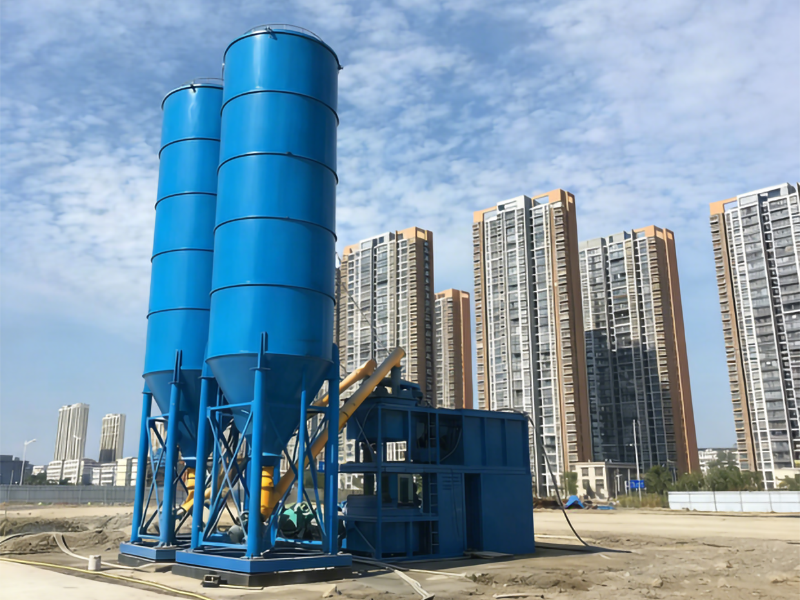
Cement is the biggest running cost, and the plant decides how much you lose
On most grouting jobs cement is the largest recurring spend, and the plant influences it in three ways: how closely a batch holds the design ratio, how much powder is lost at transfer points, and how often a batch is thrown away because it stood too long. A plant that meters water by weight and closes the batching loop around the mixer will sit nearer the design water-cement ratio than one where an operator watches a flow meter and judges the end point. A quarter of a percentage point of over-dosing, repeated across a campaign, is a real quantity of cement, and it never appears as a cost line because nobody records the design mix against what was actually batched.
The other half of the cement line is rejected material. When the mixer and the pump are poorly matched, grout stands in the line and starts to set, and that batch goes to waste. A cement grout production system sized so the pump draws roughly what the mixer makes, with a small buffer between the two, keeps material moving and the reject rate low.
Crew cost follows how much work the plant asks of people
Two plants with the same headline output can need very different crew sizes. Bagged feeding puts one person on the bag breaker for the whole shift, adds dust control work, and slows every refill. A cement silo feeding through a screw conveyor keeps the mixer topped up while the crew does something else. Manual admixture pouring adds another pair of hands and another chance of getting the dose wrong. Add the cleaning routine at the end of each shift and a cheaper plant can easily need an extra person every day, which over a long campaign costs more than the price difference. The same pattern shows up across the plants Eizoo has supplied, which is why grout plant running cost is treated as a records question as much as a hardware one.
Downtime is predictable if you look at access and spares
Every grouting plant wears out the same items: pump seals, delivery hoses, mixer liners, strainers, and valves. What separates a well-built machine is whether those parts can be reached with the plant standing in position, and whether replacements are on site or on a ship. Ask where the recommended grout plant spare parts are held for your region and count the hours a shift would lose waiting for a seal. Two days of waiting costs many times the price of the seal, and it lands on the programme rather than the maintenance budget, which is why it never gets counted. For the feed and storage side, see the AGP-C30 compact mobility series. Sites comparing grout plant running cost ask a grout plant supplier in China for the tolerance data first.
A slow fill shows up as schedule cost, not equipment cost
When the pump has to stop while the mixer refills, output drops below the figure in the quotation and the whole job stretches. A grout plant holding tank between the mixer and the pump lets batching and placing overlap, and it is usually the cheapest way to recover output on an existing machine. The same logic applies to refilling: a plant that reloads quickly between batches keeps the pump working instead of standing idle with grout in the line.
Records and testing are cheap to include and expensive to skip
Client quality systems increasingly ask for pressure, flow, and ratio data for every batch, and a plant that does not produce it moves the cost to the site in re-testing and argument. An automatic pressure and flow printout is the cheapest insurance on the job, because it settles a question about a wall section without a second round of drilling or coring.
Services and mobilisation appear before the first batch
Power, water, the pad, the crane, and transport permits are all part of getting the plant into production, and none of them come from the equipment partner. The useful habit is to price them as part of the plant decision, because a machine that arrives before its supply is connected sits at full cost with nothing being placed. Budget the tie-in, the water storage, and the standby arrangements alongside the machine. Eizoo has traced grout plant running cost to the weighing and metering chain more often than to the mix design.
| Running line | Where it hides | What brings it down |
|---|---|---|
| Cement | Over-dosing, transfer spillage, rejected batches | Weight-metered water, closed-loop batching, matched mixer and pump |
| Crew hours | Bag breaking, manual dosing, cleaning | Silo and screw conveyor, calibrated admixture lines |
| Downtime | Unreachable wear parts, distant spares | Service access, local spare stock, planned replacement |
| Schedule | Pump waiting while the mixer refills | Holding tank between mixer and pump |
| Rework | Weak batch records, disputed sections | Automatic pressure and flow printout |
| Mobilisation | Power, water, pad, permits | Confirmed supply plan before delivery |
How to compare two plants on running cost rather than price
Take the campaign length, the design mix, and the expected daily output, then run both machines through the same six lines. Two plants that differ by a small percentage in price can differ by a large margin in cement use and crew size, and the difference repeats every day of the job. The comparison is quick once the lines are written down, and it is the only way to see which machine is actually cheaper to own. Keep the field notes on to read a grout plant quotation with the site paperwork. Buyers who ask about grout plant running cost usually raise it with a China grout plant manufacturer first, because the tolerance data settles most of the argument.
Power, water, and the cost of an oversized machine
A machine larger than the duty needs draws more power, asks for a bigger supply, and runs at part load for most of its life. On generator power that shows up in the fuel log, and on a mains supply it shows up as a connection the site cannot provide without an upgrade. Size the plant to the duty you actually have, then put the margin in the buffer rather than in the mixer.
Water is the other service that hides cost. A plant needing a steady flow at pressure may require a break tank and a booster pump, and those items belong in the ownership comparison rather than in the site’s contingency. A plant that tolerates a lower feed pressure can run from what the site already has, which is worth real money at the start of a job. Eizoo has seen grout plant running cost on new plants as often as on old ones, which is why the first month is documented closely. Sites comparing grout plant running cost ask a grout plant supplier in China for the tolerance data first.
The counter-argument is spare capacity. A machine working well below its rating lasts longer and copes with a surge, so the aim is not the smallest possible plant but one whose working point sits near the middle of its range for most of the shift. That is a sizing conversation, and it belongs before the order rather than after the first week of part-load running.
Mobilisation, pad preparation, and the cost of a bad base
Every campaign starts with a pad, and a poor base costs for the whole job. A plant that settles or walks needs re-levelling, hose re-routing, and eventually repairs, and the symptoms appear as vibration and unstable pressure rather than as obvious damage. A properly prepared pad is a small cost that removes a recurring one.
Mobilisation cost scales with the shipping configuration. A plant that breaks into modules small enough for standard transport moves cheaply between sites, while one that needs special loads pays the same premium every time it relocates. For a contractor running several jobs a year, that difference repeats often enough to matter.
Access belongs in the same calculation. If the delivery vehicle cannot reach the pad, the powder arrives in bags and the crew carries them, which changes the labour line for the entire job. Map the route the delivery will take before the plant is specified. Supervisors usually ask for grout plant running cost checklist when the numbers stop matching the recipe.
Wear parts and consumables across a long campaign
The wear list on a grouting plant is short and predictable: pump seals, delivery hoses, mixer liners, strainers, and valve seats. What varies between machines is how easily those parts can be replaced in position and whether the recommended stock is available locally. Both decide how much of a campaign is lost to waiting. Open the page on much grout plant output does for the record format used on site. The engineering team at Eizoo treats grout plant running cost as a specification issue rather than a maintenance one.
Consumable quality is a running cost that is easy to misread. Cheap hoses and seals fail early and take a shift with them, while the recommended items last the campaign. The unit price difference is small next to the difference in stopped time, which is why the cheapest partner is rarely the cheapest decision. The published guidance from DFI Journal is worth reading alongside the site records.
A planned replacement routine does more for uptime than any single upgrade. Changing a seal on a quiet day costs an hour, while changing the same seal mid-placement costs a batch, a purge, and a great deal of goodwill with the client. Crews tend to look for grout plant running cost causes before they touch the hardware.
What to ask a supplier about running cost before ordering
Ask for the recommended spare list with local availability, the power and water figures the plant needs at working output, and the service access for each wear item. Those three answers tell you most of what the running cost will look like over a campaign, and a supplier who cannot answer them is selling a machine rather than a solution.
Ask how the plant behaves at the margins: what happens when the mix runs lean, when the feed pressure drops, and when the route grows by fifty metres. A plant that holds its output through those changes costs less to own than one that has to be nursed.
Finally, ask for a reference site running the same duty. A short conversation with a contractor who has run the machine for a year says more about real running cost than any specification sheet, and it takes ten minutes.
A three-year view on one page
Write the purchase price at the top, then the six running lines beneath it, and total them over the campaign. Most buyers find that the order changes, and that the machine which looked expensive in the meeting is the one that finishes the work with fewer people, less cement, and fewer stopped shifts. That page is worth more than any specification sheet, because it reflects the job you are actually running. Eizoo designs the powder and water lines so that grout plant running cost can be isolated without dismantling the plant. New operators are given grout plant running cost field notes in the first week.
Water supply belongs in the running cost even though it looks free. A mixer that needs steady pressure and volume will stall on a site where the mains feed drops whenever the neighbouring crew draws water, and the answer is usually a small break tank and a booster pump rather than a larger machine.
Power quality is another quiet cost. A plant running on a generator with unstable voltage will nuisance-trip its control system, and every trip costs a restart, a purge, and lost grout. Ask what voltage tolerance the plant expects and whether a stabiliser is needed before you blame the machine. For the tolerance data behind these checks, see the field notes on to choose a geotechnical grout plant.
Transport between sites is a cost that only shows up on the second job. A plant that breaks down into modules small enough for a standard flatbed will move for far less than one that needs low-loaders and escorts, so ask about the shipping configuration, not just the working footprint.
Operator training is often treated as free and is not. A crew that learns the control system from a manual loses the first week to trial batches and cleaning up mistakes, while a plant commissioned with the supplier on site starts producing properly on day one.
Consumable quality is worth a conversation. Cheap hoses and seals fail early and take a shift with them, while the same items from the recommended source last the campaign. The difference in unit price is trivial next to the difference in stopped time. For projects working to a stated specification, the site file usually has to show EN 12715 grouting records.
Storage of cement on site affects both cost and quality. Damp powder cakes, feeds badly, and produces lumpy grout, so covered storage and a first-in-first-out routine are part of the plant’s running cost even when the silo is sealed. Eizoo asks for the batch log first whenever grout plant running cost is reported, because the pattern narrows the cause faster than a site visit.
Cleaning time is a real line and it scales with design. A plant with drain points and smooth internal surfaces washes down in twenty minutes, while one with ledges and dead corners takes an hour of the crew’s time every single shift.
Vibration and anchoring matter on long campaigns. A plant that walks across the pad will need re-levelling, hose checks, and eventually repairs, so the cost of a proper concrete pad is repaid in the first weeks of steady production.
The cost of over-mixing is easy to miss. Running the mixer longer than the design requires wastes power and time and can entrain air, so a plant with a timed mix cycle produces more consistent grout than one that leaves the decision to the operator.
Consider what a spare pump does for your programme. On a long job with no standby, a pump failure stops everything; with a second pump on site, or a plant configured so a backup can be swapped in, the cost of the spare is recovered the first time it is needed.
Site access restrictions have a cost even when the plant fits. If the delivery vehicle cannot reach the pad, every refill becomes a manual job, so map the route the delivery will take and price the handling before the plant arrives.
Finally, count the cost of the first week. A plant that commissions cleanly and produces saleable grout on day two is worth more than a cheaper machine that takes a fortnight to settle, and that week of production is pure profit for the buyer. For the configuration used on larger sites, see the cement grout plant for deep mixing.
Ask how the plant behaves on a lean mix. Some machines run comfortably at a single ratio and struggle when the design moves lean for compaction or fill grouting, and the difference shows up as pressure and output rather than as an obvious fault. If the job will use more than one mix, ask for both to be demonstrated before the decision is made. On the sites Eizoo Machinery services, grout plant running cost is usually found in the log before it is found in the machine.
Frequently asked questions
Which running cost is usually the largest on a grout plant?
Cement, on almost every grouting job. It is the biggest recurring spend and the one the plant influences most, through ratio accuracy, transfer losses, and how much material is rejected because the mixer and pump are not matched.
Can a holding tank really change the economics of a plant?
It can, because it lets batching and placing happen at the same time instead of one waiting on the other. That recovers output you have already paid for, and on a long campaign it is usually the cheapest upgrade available.
How do I estimate downtime cost before I buy?
List the wear items, find out where the recommended spare stock is held for your region, and multiply the waiting time by the cost of a stopped shift. If the answer is uncomfortable, ask for the parts to be kept locally.
Do batch records affect cost or only compliance?
Both. The record settles disputes about a section without extra testing, which is a direct cost saving, and it satisfies the client quality system that would otherwise hold up payment.
Why does a cheaper plant sometimes need a bigger crew?
Because bagged feeding, manual admixture dosing, and awkward cleaning all consume hands. A plant that automates those steps can run with fewer people, and the saving repeats every shift of the campaign.
If you are weighing two machines and the price gap is small, send the campaign length, the design mix, and the expected daily output to the engineering team and work through the running lines with us before the order goes in.
Sending the batch log, the calibration sheet, and the material certificates to the manufacturer’s service team is what turns a symptom into a component list. Eizoo keeps the weighing and metering documentation with the plant, so the next enquiry starts from records rather than from memory.