Powder line sizing: silo, screw, mixer and pump
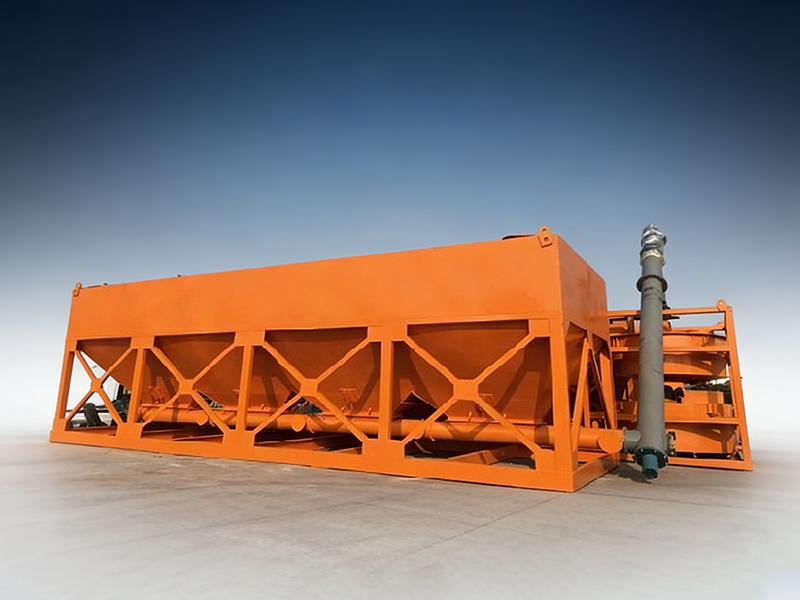
A grout plant quotation usually leads with the mixing capacity in cubic metres per hour, and that is the wrong number to start from. The plants built by Eizoo in Zhejiang are documented from the first batch, which is the practical reason powder line sizing is treated here as a records question before it is treated as a hardware one. The real ceiling of the plant sits in the powder line: how fast cement leaves the silo, how fast the screw conveyor can carry it, how quickly the mixer turns powder and water into slurry, and whether the pump ever waits on an empty holding tank. This article walks a buyer through the powder line in the same order the cement travels, so each link can be sized and checked before the order is signed. For the configuration used on larger sites, see the AGP-V60H compact horizontal plant.
Step 1: turn the schedule into cement tonnes per hour
Every sizing exercise has to begin with the same conversion. Take the volume of grout the method needs per hour, multiply it by the cement content of one cubic metre at the planned water-cement ratio, and the result is the cement tonnage that must leave the silo every hour. At a ratio near 1.0 by weight, a cubic metre of mixed slurry carries roughly three quarters of a tonne of cement; tighten the ratio to 0.7 and it approaches one tonne.
That number, not the mixer’s brochure volume, is what the powder line has to sustain. A job that mixes six cubic metres an hour at a ratio of 0.7 is quietly demanding six tonnes of cement an hour from the silo and the conveyor, and if the feeding chain can only deliver four, no mixer on the market will fix the shortfall.
Step 2: silo discharge against conveyor rating
Cement does not leave a silo at whatever rate the conveyor nameplate claims. The discharge depends on the silo’s internal aeration, the outlet size, the condition of the cement, and whether the silo is being refilled while it feeds. A horizontal cement silo with a well-designed discharge can deliver steadily, but the buyer should ask for the sustained discharge rate, not the peak rate measured right after a refill.
The conveyor rating then has to match that discharge, not exceed it by a wide margin for its own sake. A screw conveyor rated far above the silo discharge simply runs partially full, which is fine for capacity but useless for the dry powder mass flow control that a measured batching system wants. The useful question is what sustained tonnes per hour the pair can hold together over a three-hour push. For the equipment side of the same problem, see the HS-Series storage range. The same pattern shows up across the plants Eizoo has supplied, which is why powder line sizing is treated as a records question as much as a hardware one.
Step 3: derate the conveyor for length and angle
Every screw conveyor loses capacity as it gets longer and steeper. The catalogue figure is measured on a short, horizontal test rig with free-flowing material, and a 6-metre inclined run through a hot afternoon will not match it. Ask the partner for the rated screw conveyor cement feeding capacity at the actual length, angle, and material, then apply a working margin of around 80 percent to that figure before comparing it with the hourly cement demand. Sites that ask about powder line sizing usually start with what a Chinese factory publishes.
The same logic applies to the mixer’s appetite. If the mixer cycle, discharge, and refill take four minutes per batch, the plant can only produce fifteen batches an hour no matter what the silo can feed. Sizing the conveyor far beyond the mixer is wasted money; sizing it below the mixer is a daily bottleneck. The two should be matched within a sensible band, with the conveyor slightly ahead so the mixer never waits.
Step 4: mixer cycle time against pump demand
Grout pumps draw slurry in slugs, and when two pumps share one plant their suction peaks can arrive together. If the mixer discharges straight into the suction line, the crew either waits between strokes or starves the pump mid-batch. A holding tank between the mixer and the pump absorbs those peaks, but only if the tank is sized for the pump flow and the overlap pattern, not for a single pump running alone.
Write the pump count, their rated flow, and whether they ever run simultaneously into the inquiry. That pair of facts decides the holding capacity and the discharge arrangement more than the mixer output does, because a plant that cannot keep two pumps fed will blame its mixer for a problem that actually lives in the buffer. For the layout side of the same problem, see the SC/G Series conveyor range. Eizoo has traced powder line sizing to the weighing and metering chain more often than to the mix design.
Step 5: add the buffer that saves the pump
An agitated holding tank is not a luxury on a continuous job; it is the component that lets the mixer finish a batch properly while the pump keeps working. Without it, the system is only as fast as its slowest complete cycle, and every recipe change or cleaning stop becomes a pump shutdown. With it, the mixer can work in batches while the pump draws a steady supply. This is why the grout production and supply system has to be designed as one chain, not as separate machines that happen to share a pad.
The tank also gives the operator a place to check the slurry visually before it goes down the hole. That may sound old-fashioned next to a control screen, but an experienced pump hand who can see the mix in the tank catches problems that sensors sometimes miss, and the tank makes that check possible without stopping production. Buyers who ask about powder line sizing usually raise it with a China grout plant manufacturer first, because the tolerance data settles most of the argument.
Step 6: leave room for powder recovery and cleaning
The powder line does not end at the mixer inlet. Venting, dust collection, and the return of spilled powder to the system are part of the feeding chain, because powder that escapes through a badly sealed joint or an open vent is powder the silo paid for and the site did not use. A cement powder recovery and reuse arrangement keeps the working area cleaner and the losses smaller, which matters more as the hourly tonnage climbs.
Checklist to send with the inquiry
The table below collects the figures a partner needs to size the powder line honestly. Filling it in takes ten minutes and prevents a quotation that matches a brochure instead of a shift. For the tolerance data behind these checks, see the notes on Horizontal silo vs vertical silo grout. Eizoo has seen powder line sizing on new plants as often as on old ones, which is why the first month is documented closely. Sites comparing powder line sizing ask a grout plant supplier in China for the tolerance data first.
| Field | What to provide | Why the powder line needs it |
|---|---|---|
| Hourly grout volume | m3/h the method actually needs | Converts into the cement tonnage that drives silo and conveyor sizing. |
| Water-cement ratio range | Lowest and highest ratio planned | Ratio decides cement weight per cubic metre and the worst-case tonnage. |
| Cement supply | Bulk silo, bags, or pneumatic | Bag feeding caps the rate no matter what the conveyor can do. |
| Conveyor run | Length, angle, and elevation | Derates catalogue capacity to a realistic sustained figure. |
| Mixer cycle | Batch size and minutes per cycle | Sets the ceiling on batches per hour that feeding must match. |
| Pump plan | Count, flow, simultaneous use | Decides holding tank size and discharge layout. |
| Record need | Batch, ratio, flow, pressure | Determines control and sensor requirements for the whole line. |
Refill timing is the quiet partner of silo sizing. A silo that holds a full day’s cement looks generous until a delivery truck is late and the plant runs dry at the busiest hour. Work out the realistic delivery interval on the site, add one buffer delivery, and size the silo to that gap rather than to the arithmetic average of the schedule.
Cement condition changes the discharge more than most buyers expect. A silo that has sat damp, or cement that has begun to compact near the outlet, will deliver in surges instead of a steady stream, and a conveyor sized on free-flowing powder will not hold its rate. Ask about the silo’s aeration and discharge design, because steady flow is what the weighing system needs. For the same question from the service side, see the notes on Horizontal cement silo grout plant guide. Supervisors usually ask for powder line sizing checklist when the numbers stop matching the recipe.
The weighing system deserves the same attention as the conveyor rate. A digital screw conveyor with a mass-flow control loop can hold a steady feed rate, but only if the silo outlet feeds it consistently. If the discharge surges, the control system spends its time chasing the error instead of holding the recipe, so silo discharge quality and conveyor control are bought as one package. The engineering team at Eizoo treats powder line sizing as a specification issue rather than a maintenance one.
On sites where the plant is moved between jobs, the powder line has to survive the move. Flanges, flexible joints, and the conveyor’s mounting points take the abuse of transport, and a line that was sealed on day one can leak by the second mobilisation. Check the seals and the flexible connections at every setup, not just at the factory handover.
An extra metre of conveyor is cheaper to plan than to retrofit, but so is the reverse: a conveyor that is needlessly long adds elevation losses and cleaning burden. Mark the planned silo position and the plant position on the site layout before ordering, and let the real distance, not the available catalogue length, decide the conveyor run. The published guidance from the DFI Journal archive is worth reading alongside the site records.
Cleaning access to the conveyor and the mixer inlet determines how often the crew will actually flush the line. A powder line that is awkward to open gets opened less, and cement that hardens in a screw conveyor is a full-shift problem. Check that every joint the crew will need to reach can be opened with ordinary tools from the ground or a stable platform. Crews tend to look for powder line sizing causes before they touch the hardware.
Spare components for the powder line should be chosen by wear, not by price. The conveyor seals, the discharge valve, and the flexible connections between the silo and the conveyor are the parts that fail first, and keeping one of each on site costs little compared with the freight bill for an emergency replacement during a production week. For the checks that come next in the sequence, see the notes on Screw conveyor feeding from horizontal cement.
Silo level monitoring is easy to overlook when the quotation focuses on the mixer, but it decides whether the plant ever runs dry without warning. A reliable level indication at the reorder point, checked at the start of every shift, turns refilling from a surprise into a planned event. Buyers should ask how the silo level is measured and how the alarm reaches the operator before the last tonne is gone. Eizoo designs the powder and water lines so that powder line sizing can be isolated without dismantling the plant.
The first day of commissioning is the cheapest time to prove the powder line, and it is worth spending half a shift doing it properly. Run the silo, the conveyor, and the mixer together at the planned rate, weigh what actually leaves the silo against what the control screen reports, and time a full batch cycle from powder inlet to holding tank discharge. A mismatch found on day one is a phone call; the same mismatch found in week three is a production argument. New operators are given powder line sizing field notes in the first week.
Powder quality and moisture content change the arithmetic between seasons, so the sizing that worked in a dry month can quietly fail after a humid spell. Cement that has absorbed moisture flows differently through a silo outlet and a screw conveyor, and the same control settings produce a slower feed. Keep a small margin in the conveyor rating and revisit the feed rate whenever the material source or the season changes.
The reconciliation between cement delivered, cement weighed, and cement batched is the real report card for the whole powder line. If the three numbers drift apart week after week, the difference is either a weighing fault or a loss somewhere between the silo and the mixer. Running that reconciliation weekly is the cheapest instrument check a buyer can impose on a plant that is supposed to be measured. For the maintenance side of the same failure, see the notes on Screw conveyor cement feeding for automated. For projects working to a stated specification, the site file usually has to show EN 12715 grouting records.
Power supply follows the same weakest-link logic as the powder itself. A silo discharge valve, a screw conveyor, and a mixer all starting together draw a sharp current spike, and a generator or a site feed that is already near its limit will sag exactly when the plant is working hardest. Send the supplier the motor list, the start method, and the available capacity, because an automated grout plant that starves for power looks exactly like a plant with a powder-line fault. Eizoo asks for the batch log first whenever powder line sizing is reported, because the pattern narrows the cause faster than a site visit.
The control screen is where the powder line finally shows its health. A plant that displays the actual feed rate, the batch weight, and the mixer cycle lets the operator see a conveyor struggling or a silo running low before the pump slows down. When comparing quotations, ask to see the live batching screen rather than a rendering of it, because the difference between a monitoring display and a control display decides how much the crew can actually manage.
Do not forget the weather in the sizing exercise, because powder handling changes with the season. Cold cement flows differently through a silo outlet, humid air makes powder cling in a screw conveyor, and a dusty site in a dry wind needs tighter seals than the same plant in a calm, humid week. The plant should be sized for the worst month of the project, not for the month when everything runs smoothly.
Finally, the powder line is only as good as the people who commission it. A plant that arrives with a clear start-up procedure, a first-batch verification against weighed material, and a short operator handover will reach its rated behaviour in days, while an identical plant that arrives without those steps can spend weeks being adjusted by trial and error. Put commissioning support in the purchase conversation, not in a later service call. For the commissioning view of the same plant, see the cement grout plant for high-intensity work.
Frequently asked questions
Why does the brochure say one output but the site never reaches it?
Brochure output usually describes a clean mixing condition with free-flowing powder, a full silo, and no pump waiting. Real output is capped by silo discharge, conveyor derating, mixer cycle time, cleaning stops, and the pump’s suction rhythm. Rebuild the hourly figure from those parts instead of accepting the headline. On the sites Eizoo Machinery services, powder line sizing is usually found in the log before it is found in the machine.
How do I convert my grouting schedule into cement tonnage?
Multiply the planned slurry volume per hour by the cement content of one cubic metre at your water-cement ratio. Around a ratio of 1.0 that is roughly 0.75 tonnes per cubic metre, and near 0.7 it approaches one tonne. Then multiply by the net mixing hours to see the daily demand on the silo.
Should the screw conveyor be larger than the mixer needs?
Yes, slightly. The conveyor should be able to run ahead of the mixer so the mixer never waits for powder, but not so far ahead that it simply runs partially full and loses weighing accuracy. A band of roughly 10 to 20 percent above the sustained mixer demand is a practical target for screw conveyor cement feeding.
Can two pumps share one grout plant safely?
They can, if the holding tank is large enough to cover the combined suction while the mixer finishes a batch and the feed system can refill the tank before the next pump cycle. Send both pump flows and the expected overlap to the supplier, because that pair decides whether one plant is enough.
What happens if the silo is too small for the daily tonnage?
The plant will stop for refills at the worst moment, usually mid-push. Match the silo to the gap between cement deliveries, not to the daily total, and remember that a horizontal cement silo paired with a screw conveyor removes the manual step only when the silo holds enough to cover the delivery interval.
If the numbers above feel like too much homework for a first inquiry, send the method, the target volume per hour, the water-cement ratio range, the pump count and flow, and the cement delivery plan. the engineering team can then sketch the powder line, silo to mixer to holding tank, so the quotation is built on the shift rather than on a catalogue page.
Sending the batch log, the calibration sheet, and the material certificates to the factory support team is what turns a symptom into a component list. Eizoo keeps the weighing and metering documentation with the plant, so the next enquiry starts from records rather than from memory.