AGP-V60H horizontal silo integrated grout plant for low-height and restricted sites
A site-deployment guide for projects that need a low-profile grout line, horizontal silo feeding, and strong visibility in narrow workspaces.
A site-deployment guide for projects that need a low-profile grout line, horizontal silo feeding, and strong visibility in narrow workspaces.
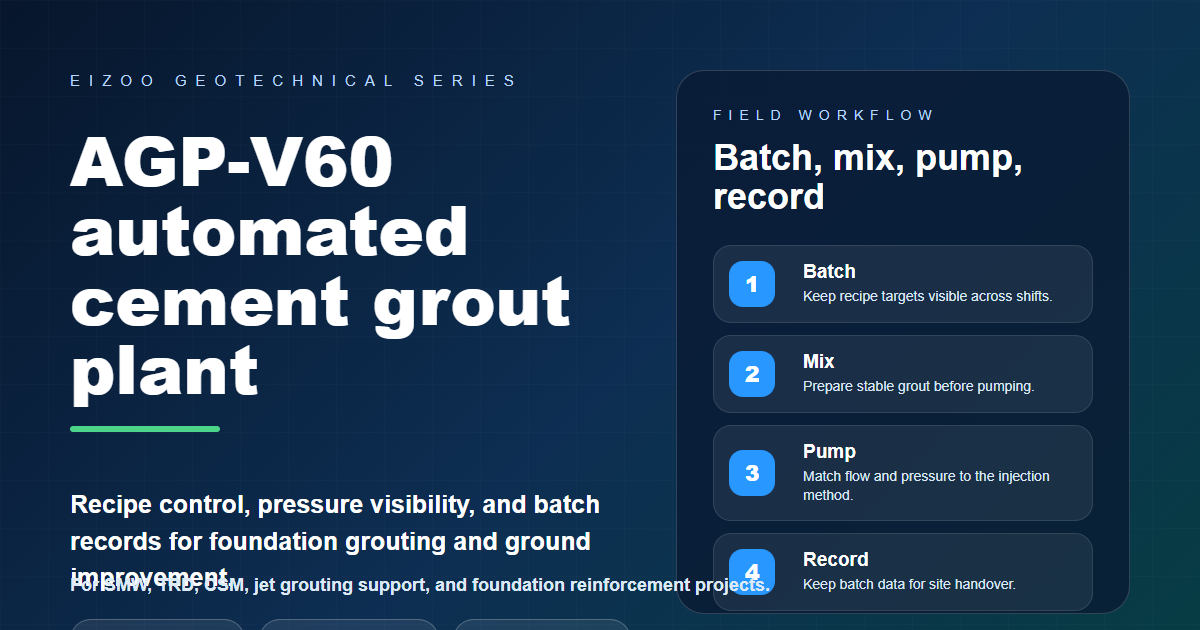
For foundation grouting, soil improvement, SMW, TRD, CSM, and jet grouting support work, the AGP-V60 is mainly about control. Buyers usually ask the same thing in different ways: can the plant keep the grout mix stable, can the operator see pressure and flow clearly, and can the site team hand over records after the job?
The short answer is yes. AGP-V60 is built for contractors who need repeatable cement grout production on geotechnical sites, especially where batch consistency, operator visibility, and traceable records matter more than a simple mixer-and-pump setup.
AGP-V60 is a better fit when the project has continuous grouting work, changing site shifts, or client QA/QC requirements. It is commonly discussed for foundation engineering, ground improvement, underground reinforcement, and slurry preparation jobs where the grout ratio cannot drift casually during the day.
If the job is small and the crew only needs occasional manual mixing, a compact grout mixer may be enough. If the site needs stable output, recipe control, and clearer records, AGP-V60 becomes easier to justify.
| Question | Why it matters on site |
|---|---|
| Required output per hour | Helps match mixer, agitator, pump, and silo feeding capacity. |
| Grout ratio and material type | Cement, bentonite, additives, and water ratio affect mixing time and pump selection. |
| Power supply and site layout | The plant configuration depends on available power, footprint, and access route. |
| Record requirements | Some projects need batch printouts, pressure records, or digital production data. |
| Linked equipment | Silos, screw conveyors, grout pumps, and injection lines should be planned together. |
Manual adjustment can work for simple jobs, but it puts too much pressure on the operator when production is continuous. Recipe control gives the crew a fixed target and makes it easier to repeat the same grout mix across batches.
That matters when a client asks why one section performed differently from another. A visible process record is easier to defend than a memory of what someone thought happened during the shift.
The most common mistake is asking only for output. Output matters, but it is not the whole machine. A buyer should also confirm material feeding, mixing quality, pump compatibility, cleaning access, spare parts, and whether the control system gives the records required by the project.
Another mistake is treating the grout plant as a standalone purchase. On real sites, the plant has to work with storage silos, screw conveyors, pumps, hoses, and the injection method. One weak link can slow the whole operation.
For a smaller or narrow-site configuration, compare the AGP-C30 Compact Series. For higher-intensity work, review the AGP-V60 product page. If the site needs material storage and feeding, check HS horizontal storage silos and SC-G digital screw conveyors.
Q: Is AGP-V60 suitable for SMW, TRD, or CSM support work?
A: It is designed for continuous cement grout preparation where stable output and clear production records are needed. The final configuration should be checked against the method, soil condition, and required grout ratio.
Q: What information should I send before asking for a quotation?
A: Send the target output, grout mix ratio, power supply, site layout, feeding method, and whether the project needs pressure, flow, or batch records.
Q: Can AGP-V60 work with silos and screw conveyors?
A: Yes. Many buyers plan the grout plant together with horizontal silos and screw conveyors so cement feeding, mixing, and pumping capacity stay balanced.
Q: How do I choose between AGP-C30 and AGP-V60?
A: AGP-C30 is usually discussed for compact access and lower-volume jobs. AGP-V60 is the stronger choice when the site needs higher continuity, more control, and cleaner records.
Q: What should I ask EIZOO before placing an order?
A: Ask for a layout suggestion, pump matching advice, control and record options, spare parts list, and cleaning/maintenance access details. Those answers help confirm whether the plant fits the site before production starts.