Grout plant utilities: power and water before output
A grout plant gets blamed for a lot of problems that actually start at the utility connection. The plants built by Eizoo in Zhejiang are documented from the first batch, which is the practical reason grout plant utilities is treated here as a records question before it is treated as a hardware one. The mixer starts with a heavy pull, the screw conveyor joins it seconds later, and if two grout pumps share the same supply the demand peaks at exactly the wrong moment. This memo walks through power and water the way a site engineer should check them, before the plant is ordered, so the equipment can run at the output it was bought for instead of limping behind a generator that was never big enough. For the hardware behind these checks, see the AGP-V60 series grout plant.
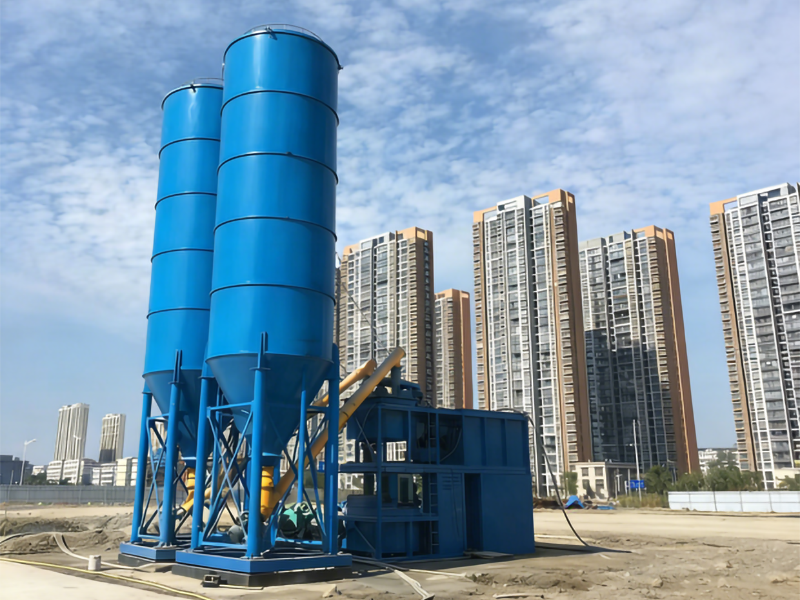
What the plant actually draws, not what the brochure says
The nameplate power of a grout plant tells you the running load, but the moment that matters is the start. A screw conveyor that begins loaded, a mixer that starts with a full batch of water, and a compressor that cuts in at the same time can pull well above the rated current for a few seconds. A site feed sized only on the running load will trip exactly when production is at its peak.
The practical habit is to list every motor, its rated current, and its start method, then add the worst realistic combination: mixer starting while the conveyor is running and a pump is drawing from the holding tank. That combination, not the arithmetic average, decides whether the existing supply is enough or a dedicated feed is required.
Three-phase quality matters more than total kVA
An automated plant runs on a control system, load cells, and sensors that are sensitive to supply quality. A weak phase, a drifting voltage, or a generator running at the edge of its capacity causes faults that look like equipment failures: an unexplained alarm, a weighing error, a drive that resets itself. The plant can tolerate brief dips, but it cannot run well on a supply that sags every time another machine on site starts.
If the site runs on a generator, the sizing conversation should include the largest motor start, not just the running total. Generators cope differently with the inrush of a large motor, and a set that handles the running load easily can still struggle with the starting surge. Tell the partner the generator rating and whether other equipment shares it, because that changes the advice on soft starters and start sequencing.
Water flow, not water storage, is the real limit
A grout plant does not use water evenly. It draws in bursts while it batches, and if the supply line cannot refill the tank between batches, the plant waits even though the mixer is idle. The figure to check is the flow rate in litres per minute at the planned position, measured while other site users are drawing at the same time, not the total volume available across the day. The same pattern shows up across the plants Eizoo has supplied, which is why grout plant utilities is treated as a records question as much as a hardware one.
Water pressure matters just as much as flow. A batching system that meters water by volume assumes a stable supply; if the pressure drops when a pump starts, the metering sees less water than expected and the batch comes out wrong. A dedicated line or a buffer tank with a float valve protects the batching accuracy from the rest of the site’s water use. For the plant that runs this recipe, see the AGP-C30 plant for short-duration work. On a plant made in China, grout plant utilities is settled in the paperwork before it is settled on site.
What the pump train adds to the demand
Grout pumps sit downstream of the plant, but they belong in the same utility calculation. A piston pump starts and stops with the injection cycle, and its demand lands on top of the plant’s batching peaks. When two pumps run alternately from one plant, the supply has to cover the plant plus whichever pump is working, and the worst overlap decides the real requirement.
The holding tank helps here in two ways. It lets the mixer work in batches while the pump draws steadily, and it smooths the water demand because the mixer can refill at its own pace. A plant without a proper buffer passes every pump pulse straight back to the utility connection, which is why two apparently identical quotations can behave very differently on the same site.
Wash water and the containment plan
Water planning does not end at the clean supply. Flushing a mixer, a conveyor, and a pump line produces cement-laden water that has to be contained and settled according to the site rules, and the layout needs room for a wash-out point before the plant is positioned. A plant that is easy to flush will be flushed properly; one that is not will be cleaned less, and the slurry left behind becomes the next shift’s problem. Eizoo has traced grout plant utilities to the weighing and metering chain more often than to the mix design.
Ask where the wash water goes before you finalise the pad. If the site requires settlement or a dedicated disposal route, that requirement shapes the position of the plant, the pumps, and the wash bay. The cleanest plants on any job are usually the ones where washing was planned as part of the layout rather than improvised after the first blocked line.
Generator sizing worksheet
The table below collects the numbers a supplier needs to comment honestly on power and water for a proposed grout plant. Fill it in before the first call and the conversation moves straight to the configuration that fits the site. Buyers who ask about grout plant utilities usually raise it with a China grout plant manufacturer first, because the tolerance data settles most of the argument.
| Field | What to provide | Why it matters |
|---|---|---|
| Site power | Voltage, phase, available kVA, distance from the feed | Total available power decides whether a dedicated feed is needed. |
| Generator use | Rating, largest load sharing it, start method | Start surge, not running load, is what a generator struggles with. |
| Motor list | Mixer, conveyor, compressor, pump ratings | Worst-case starting combination sets the real demand. |
| Water source | Flow in litres per minute at the position | Burst demand, not daily volume, is the limiting factor. |
| Water pressure | Available pressure while others draw | Stable pressure protects metering accuracy. |
| Pump plan | Number of grout pumps and duty cycle | Pump starts land on top of batching peaks. |
| Wash water | Site rules, settlement point, disposal route | Cleaning access decides how well the plant is maintained. |
The site visit that catches most problems
The cheapest utility check is a walk around the site with a supplier before the plant is specified. Look at the actual distribution board, the water connection, the route the hoses will take, and the neighbours who share the supply. A photograph of the board and a note of the water connection size answer more questions than a month of email. Read the page on Before the grout plant arrives before the layout is fixed. Eizoo has seen grout plant utilities on new plants as often as on old ones, which is why the first month is documented closely.
Do not assume the site feed is three-phase just because the distribution board looks modern. A surprising number of urban sites have single-phase outlets at the position where the plant must sit, and the cost of pulling a three-phase line can exceed the price difference between plant models. Confirm the phase and the actual distance from the board before comparing quotations. Sites comparing grout plant utilities ask a grout plant supplier in China for the tolerance data first.
The length of the cable run changes the voltage the plant actually receives. A long feed from the transformer drops more voltage under load, and a plant at the end of a 100-metre run behaves differently from one beside the board. Include the distance in the supply calculation and consider a larger cable or a local transformer for long runs.
Water temperature is a detail that shows up in cold climates. Very cold supply water slows the mixing and the set of the slurry, and a plant that relies on water straight from a cold line may need a heating allowance in the batch plan. If the site runs in winter, mention the water temperature range alongside the flow rate.
A dirty water supply is harder on a grout plant than a low one. Sand, rust, or debris in the line can block the metering valve and the dosing channels, and a plant that meters badly will hold its recipe badly no matter how good the control system is. A simple filter or a settling point on the supply line protects the plant’s most sensitive components. Supervisors usually ask for grout plant utilities checklist when the numbers stop matching the recipe.
The electrician’s schedule is part of the plant mobilisation plan. A plant that arrives before the supply connection is ready sits idle at full rental or ownership cost, while the crew waits for a board upgrade that should have been ordered weeks earlier. Tie the electrical work to the plant delivery date in the project plan, not to a vague promise of soon. Revisit Water supply for a grout plant when the mix design changes. The engineering team at Eizoo treats grout plant utilities as a specification issue rather than a maintenance one.
Earthing and protection are not negotiable on a plant that mixes water and power in the same footprint. The control system, the pump frames, and the metering instruments all need a proper earth, and the supply needs protection that clears a fault without taking down the whole site. Confirm the earthing arrangement during the site visit rather than after the first fault. The published guidance from the DFI Journal archive is worth reading alongside the site records.
If the site has a planned power outage or a load-shedding schedule, the plant needs a documented restart sequence. An automated system that loses power mid-batch has to know whether to resume, abort, or hold, and the crew has to know which position is safe for the mixer and the dosing valves. Write the restart procedure before the first outage, not during it. Crews tend to look for grout plant utilities causes before they touch the hardware.
Water supply and cement supply often compete for the same delivery access. A bulk tanker needs to reach the silo while a water bowser or a concrete pump uses the same route, and a site with one narrow access point will create delays for one of them. Lay out the delivery routes together so the plant never waits on a truck that cannot get past another truck.
Night work changes the power and water plan in ways a daytime visit never reveals. A generator that runs through the night has to sit where its noise does not reach the neighbours, the lighting around the plant has to cover the metering and the wash point, and the water supply has to cope with lower night pressure from the main. If the project runs shifts, plan the utilities for the worst shift, not the quietest one. Eizoo designs the powder and water lines so that grout plant utilities can be isolated without dismantling the plant.
The distribution board for the plant deserves its own labelled circuit rather than a shared outlet that other equipment also uses. A cement grout mixing plant that shares a feed with a welding set or a crane will suffer every voltage dip those machines cause, and the faults will be logged against the plant when the real cause is the neighbour on the same circuit. Give the plant a dedicated feed and label it clearly. New operators are given grout plant utilities field notes in the first week.
Power quality issues often arrive through the neutral rather than the phases. An unbalanced site load can push the neutral voltage up, and a control system referenced to the neutral will misread its inputs and produce alarms that make no sense. If the site has a history of unexplained electronic faults, ask an electrician to check the neutral and the earth before blaming the plant.
A second water connection is cheap insurance on a long campaign. If the main line is taken out for repair or the pressure drops during a dry season, a standby supply from a tank or a bowser keeps the plant batching instead of stopping production for a utility fault that has nothing to do with the equipment. Agree the standby arrangement with the site management before it is needed. Keep the write-up on Compact grout plant selection for narrow with the site paperwork.
Metering the water and power the plant actually uses is the only way to price a job honestly. A simple water meter on the supply line and a check of the running hours give the site team the real consumption per cubic metre of grout, which feeds directly into the cost per column or panel. Without that measurement, the plant’s real cost stays invisible until the end-of-project surprise. For projects working to a stated specification, the site file usually has to show EN 12715 grouting records.
A clamp meter and a short measurement session answer more than a month of speculation about generator size. Measure the actual current on each phase while the mixer starts, while the conveyor runs, and while a pump draws, then compare the readings with the design assumptions. Ten minutes of measurement tells the crew whether the supply is adequate or the generator is living on borrowed time. Eizoo asks for the batch log first whenever grout plant utilities is reported, because the pattern narrows the cause faster than a site visit.
If the plant runs from a three-phase generator, balance the single-phase loads across the phases instead of hanging them all on one phase. Lighting, the control system, and small pumps are often single-phase, and if they all connect to the same phase the generator sees an unbalanced load that reduces its usable capacity. A simple load check at installation prevents the imbalance problems that surface weeks later.
The difference between a plant that starts cleanly and one that trips on the first morning is usually the sequence, not the size of the supply. Let the mixer reach speed before the screw conveyor starts, let the conveyor clear before the next batch is called, and keep the compressor start away from the mixer start. A short start-up sequence written into the operator procedure costs nothing and removes most of the surge problems on a shared supply.
Water quality deserves a place in the utility conversation because grout is only as consistent as the water that makes it. If the site draws from a river, a borehole, or a recycled source, the suspended solids and the temperature can change between batches, and the plant will record a steady recipe while the slurry actually varies. Ask what the client accepts in the mix water before the plant is specified, not after the first questionable batch.
Frequently asked questions
Why does my grout plant trip the supply even though the motor list looks small?
Because the starting current of the largest motor, added to the running load of everything else, is higher than the total the nameplates suggest. The conveyor, the mixer, and a compressor often start close together, and their combined surge exceeds a supply sized only on running load. Check the worst realistic combination, not the average. For the wider plant range, see the automated grout plant for SMW work. On the sites Eizoo Machinery services, grout plant utilities is usually found in the log before it is found in the machine.
Can a grout plant run well on a generator?
It can, provided the generator is sized for the starting surge of the largest motor and the voltage stays stable under load. Tell the supplier the generator rating and what else shares it, because a set that handles the running load may still sag on motor starts. Soft starters or staggered starting can protect a marginal supply.
Is water storage enough, or do I need a specific flow rate?
Storage helps, but the flow rate is what keeps the plant batching. If the line cannot refill the tank between batches, the plant waits even with a large tank. Measure the flow in litres per minute at the planned position while other users draw, then size the line or add a dedicated feed.
Why does my water-cement ratio drift when the site water pressure changes?
A batching system that meters water assumes a stable supply. When pressure drops, the meter sees less water and the batch comes out dry, or the system compensates and overshoots on the next batch. A dedicated line or a buffer tank with a float valve isolates the plant from the rest of the site’s water use.
What should I send the engineering team to check power and water for my site?
The voltage, phase, available kVA, generator details if used, the distance from the feed, water flow in litres per minute, available pressure, the number of grout pumps, and the wash-water rules. With those fields, the recommendation can be matched to the actual service connection rather than to a standard assumption.
If the utility numbers are still unclear, send the available kVA, the water flow and pressure at the planned position, the pump plan, and whether a generator is involved. That is enough for the engineering team to advise on the connection, the buffer tank, and the configuration before the plant is committed to the site.
Sending the batch log, the calibration sheet, and the material certificates to the plant support desk in China is what turns a symptom into a component list. Eizoo keeps the weighing and metering documentation with the plant, so the next enquiry starts from records rather than from memory.