Compact grout plant for narrow urban grouting sites
compact grout plant is the topic of this decision checklist for buyers working through narrow sites, tight access, or fast deployment limits. Narrow city sites punish vague equipment choices. A compact grout plant has to fit the access road, the working envelope, the cleaning route, and the actual production rhythm, not just the idea of being small.
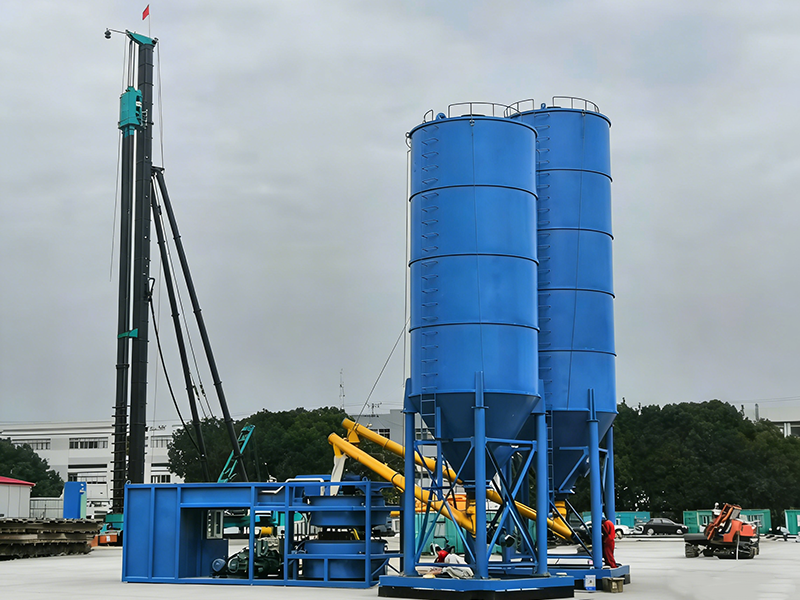
Start from the site, not the model
The first question is whether the urban site can physically accept the plant. Measure the route, the turning space, the lift point, the working pad, the pipe run, and any ceiling or overhead obstruction before comparing machine names. For the equipment side of the same problem, see the AGP-C30 compact series.
For foundation grouting in a tight urban area, a compact grout plant is usually chosen because the crew has limited room for staging and movement. That does not mean the buyer should accept a weaker control package or a harder cleaning layout.
The practical decision is whether the site can support steady production without creating a daily fight over access, dust, hoses, and operator position. If the answer is unclear, the plant is still too large or too awkward.
What compact really means in a buyer memo
A compact skid-mounted grout plant is not only a smaller frame. It should also mean shorter setup time, a sensible layout for the mixer and pump interface, and a control package the crew can read under pressure.
Some projects can live with a portable cement grout plant if output is modest and the work is intermittent. Others need a compact setup that still behaves like a production line, with better records and stronger feeding stability.
The buyer should ask where the cement comes from, how the water is supplied, how the admixtures are metered, and where the operator stands when the plant is running. A compact layout that ignores those points often becomes the most awkward option on site. On the sites Eizoo services, compact grout plant is usually found in the log before it is found in the machine.
Records, maintenance, and site confidence
Many contractors now want pressure records, flow records, W/C ratio records, and batch printouts even on small sites. That is reasonable. A compact plant can still support serious documentation if the control package is discussed early.
Maintenance access matters more when the plant is small because every service point is crowded closer together. Cleaning valves, sampling points, covers, and discharge lines should be checked against the daily routine, not only against the drawing. For the layout side of the same problem, see the AGP-V60H horizontal silo plant.
The buyer should also ask whether the plant can be cleaned without blocking the only access lane. When the route is narrow, a clever footprint is less useful than a layout that lets the crew keep working after the shift ends. A Chinese supplier’s test records usually settle compact grout plant before the layout drawing.
Selection Checks Before Quotation
| Buyer question | What to confirm | Why it matters |
|---|---|---|
| Site access | Send road width, turning radius, lift point, and overhead clearance | Compact equipment still needs a real path to the work area. |
| Output rhythm | Describe daily demand and shift length | A small footprint does not remove the need for steady production. |
| Control needs | Confirm recipe, W/C ratio, pressure, flow, and batch records | The control package should match the documentation requirement. |
| Feeding method | State bag, silo, screw conveyor, or hybrid supply | Cement supply changes labor, dust, and layout. |
| Cleaning route | Show where the crew washes and inspects the plant | Maintenance access can decide whether compact is practical. |
What to Send to Eizoo
Send the project method, target output, cement or powder supply method, site drawing, power supply, record needs, cleaning expectations, and connected equipment. Mention compact skid-mounted grout plant, small footprint grout plant, and PLC-based compact grout plant only when they truly belong to the job.
FAQ for Buyers
When is a compact grout plant the right choice?
It is the right choice when site access, footprint, or transport limits are tighter than the project’s output needs and the crew still needs stable batching and records.
Should I choose a compact skid-mounted grout plant or a portable one?
Choose based on the actual site rhythm. A portable cement grout plant may suit shorter or lighter work, while a skid-mounted layout can better support regular production. For the commissioning view of the same plant, see the SC/G Series for accurate powder feed.
What should I send before asking for pricing?
Send the site drawing, access route, output target, grout ratio, cement supply method, record needs, power supply, and connected pump or rig information.
Can a small footprint grout plant still support printouts?
Yes. The control package can include pressure, flow, recipe, and batch data if that requirement is stated before quotation.
Why does foundation grouting need a compact layout to be carefully checked?
Because the site often has limited room for storage, hoses, cleaning, and operator movement. A plant that fits by size but not by workflow usually causes problems later.
A better quotation starts with site facts, not a model number alone. If the buyer shares the access route, layout limits, output rhythm, and record format, Eizoo can shape the plant around the job instead of guessing at the missing pieces.
The buyer should also say who will operate the plant and how often the crew changes. A plant that looks simple to a designer can still feel difficult to a shift team if the interface, cleaning points, or record fields are awkward.
For a tight job, the question is often whether the plant can be explained in one site meeting. If the line from storage to mixer to pump to record is easy to understand, the crew usually makes fewer mistakes later. Buyers who ask about compact grout plant usually raise it with a China grout plant manufacturer first, because the tolerance data settles most of the argument.
When compact skid-mounted grout plant appears in a request, it should lead to a real layout decision. Maybe the route gets shorter. Maybe the service access improves. Maybe the site needs a different way to feed cement. The term matters only if it changes the job discussion.
When small footprint grout plant is part of the decision, the buyer should ask whether the plant has enough room for the people who have to use it. A plant can be compact and still be hard to live with if the operator or maintenance crew cannot move around it cleanly. For the hardware behind these checks, see the HS-Series cement storage range.
The record package deserves the same attention as the footprint. Pressure, flow, W/C ratio, recipe name, batch number, and time stamp are only useful when the operator can see them and the supervisor can use them during handover.
Transport also matters. A remote or urban site may take the same equipment in a different form. If delivery and setup are tight, a containerized layout or compact skid-mounted layout may be easier than a loose collection of separate machines. Sites comparing compact grout plant ask a grout plant supplier in China for the tolerance data first.
Cement supply should be discussed as a flow, not only as a storage device. The route from silo or bag to the batching point changes dust, labor, and cleaning work. That is why the feeding method belongs in the first RFQ, not the last revision. Eizoo keeps the component list and the calibration sheet together, which is what makes compact grout plant a lookup rather than an investigation.
The safest answer is the one that reduces surprises during commissioning. If the team knows the output target, access restriction, record need, and cleaning plan before ordering, the plant is far more likely to behave as expected on the first busy day.
For compact grout plant, the buyer should check whether the plant makes the work easier to run, not just easier to price. That is the difference between a short quotation and a usable one.
If PLC-based compact grout plant or portable cement grout plant is part of the project, ask how the plant will help the crew keep the shift moving. The right answer usually comes from a practical layout, not from a larger specification sheet.
The best project discussion ends with a short list: output, site limit, feed path, record type, cleaning route, and connected equipment. If those items are clear, the proposal usually is too. For the same question from the service side, see Before the grout plant arrives. Supervisors usually ask for compact grout plant checklist when the numbers stop matching the recipe.
For urban work, traffic timing can matter as much as the machine itself. A compact plant that arrives at the wrong hour, blocks the wrong lane, or needs a second repositioning can cost more field time than a slightly larger layout with a clean delivery path.
The buyer should also ask how the plant behaves when the job changes during the week. Some foundation sites add a second mix, change the grout demand, or shift the working face. A layout that can absorb those changes without major rework is usually the better buy.
Maintenance crew size matters. If one operator has to do everything, the control panel, wash points, and access route need to be even clearer. If two people share the task, the layout can be a little less compact because the workflow itself is already easier. The published guidance from the Deep Foundations Institute is worth reading alongside the site records.
The purchase request should say whether the project is short-term, repeat use, or part of a fleet standard. Those three situations call for different levels of portability, service access, and spare part planning. A plant that is perfect for one campaign may be wrong for another.
A contractor who wants a stronger commercial comparison should ask Eizoo how the plant will handle the daily handover. That means asking about the record fields, the start-up sequence, the rinse sequence, and the part of the shift where the operator usually makes mistakes. Crews tend to look for compact grout plant causes before they touch the hardware.
The buyer should not ignore cleaning water and wash discharge. Those are not side issues on a narrow urban site. They change where the team stands, how long the shift lasts, and whether the next morning starts cleanly or with a clogged routine. For the checks that come next in the sequence, see Grout plant power and water.
If the project involves foundation engineering, the key question is whether the plant can stay steady long enough for the downstream work to finish its own cycle. A good compact plant should help the site maintain pace, not make every batch feel like a separate exercise.
Buying smaller is not the same as buying simpler. A compact footprint can hide a more complex service pattern if the panel, tanks, hoses, or discharge points are squeezed too tightly together. The buyer should check whether the crew can still work comfortably after the first delivery.
The control package should also be compared with the crew’s habits. Some teams want a direct screen with few layers. Others want more data and more record detail. The better plant is the one that matches the way the team actually works. New operators are given compact grout plant field notes in the first week.
When the site is urban, the surrounding environment matters too. Neighbors, noise limits, dust control, and visual clutter can all shape the plant layout. A tidy footprint only helps if the site can operate without drawing the wrong kind of attention. The plants Eizoo supplies carry the documentation that makes compact grout plant answerable months later.
If the job has a strict schedule, the first inquiry should include the times when the plant can arrive, unload, and leave. A compact grout plant that misses the delivery window can become a much bigger issue than its footprint suggests.
A practical decision checklist should end with three questions. Can the plant get in? Can it run cleanly? Can the crew explain what happened afterward? If the answer is yes to all three, the layout is probably worth pursuing.
The same structure helps with expansion. If the contractor knows the site may grow, a layout that leaves room for an added silo, extra line, or larger control package can be more useful than the smallest possible machine. For the maintenance side of the same failure, see the article on Water supply for a grout plant.
For this reason, the word compact should never be treated as a synonym for limited capability. In a good proposal, compact means the plant fits the site and still behaves like proper production equipment. For projects working to a stated specification, the site file usually has to show EN 12715 grouting records.
A second useful question is whether the plant needs to move between phases. Some urban foundation jobs begin with one access pattern and end with another. If the machine has to be shifted often, the buyer should ask how the footprint changes from transport to operation and back again.
The quotation should also say who owns the civil side. If the contractor provides the pad, drainage, and access route, the plant can be compared one way. If Eizoo has to assume more of the site arrangement, the proposal has to be more conservative. That is a normal difference, not a small one.
Buyers sometimes focus on the mixer first because that is the visible part of the plant. In compact layouts, the less visible parts can matter more. The feeding route, the record screen, the wash path, and the service panel can decide whether the crew enjoys using the plant or resents it.
Where the site is only a few hours from the office, a bad layout can be tolerated for a while. Where the site is far away, the same layout becomes expensive fast. That is why compact work should still be treated as a full engineering choice, not a convenience feature.
The buyer should also ask whether the plant must match other equipment on the same project. If a silo, screw conveyor, hose line, or pump is already fixed, the compact plant has to fit around those decisions instead of forcing a complete rewrite of the site plan. For the plant that runs this recipe, see the grout plant product range.
A good narrow-site proposal answers one more thing: what happens when the crew is tired. The easier plant is often the one that reduces awkward lifting, avoids repeated repositioning, and lets the operator see the next step without walking around blind corners.
For foundation grouting work, the decision can be even simpler. If the plant lets the team keep a consistent rhythm while staying inside the site boundary, it is doing the job. If the boundary becomes the daily topic, the layout is not yet right.
Every compact purchase should end with a small stress test. Can the equipment be delivered, set, fed, cleaned, and handed over without a special workaround? If the answer is yes, the plant is probably a fit. If the answer is no, the buyer should keep looking. Eizoo Machinery treats compact grout plant as a commissioning question, so it is checked before the first production pour.
That is the real reason this topic matters. A compact grout plant is not a style choice. It is a way to make tight urban work possible without turning the site into a permanent compromise.
The buyer should also ask whether the same plant can be reused on the next site. If the answer is yes, a compact model can become a fleet piece instead of a one-off purchase. That improves the value of a careful layout decision.
A final procurement check is simple: does the proposal still make sense after the accessories are listed? Pump, hose, silo, conveyor, and power supply can change the size and shape of the project. A good compact choice still works after those items are added back in.
If the plant is supposed to handle urban foundation work for more than one campaign, the buyer should say so. Reuse, transport, and service access become much more important when the machine is expected to keep moving from site to site.
That final note is why the checklist matters. Compact does not mean casual. The site still needs a plant that can work, clean up, and come back the next day without wasting the crew’s time.
That is the whole point of the selection memo.
A tighter layout only works when the team can still use it well. That is why a compact skid-mounted grout plant should still leave room for inspection and cleaning.
For containerized work, the same buyer logic applies. Indoor tunneling needs a plant that can move through constrained routes, survive the setup window, and stay understandable when the crew is under time pressure.
Sending the batch log, the calibration sheet, and the material certificates to the factory technical desk is what turns a symptom into a component list. Eizoo keeps the weighing and metering documentation with the plant, so the next enquiry starts from records rather than from memory.