Admixture dosing on a grout plant: a buyer memo
cement grout plant with 4-5 admixture dosing is the focus of this buyer memo for contractors comparing automated grout equipment. When a buyer asks for 4-5 admixture dosing, the question is rarely about the number of tanks alone. It is about whether the plant can keep recipe changes clear, dose each component steadily, and leave a record the site team can explain after a long shift.
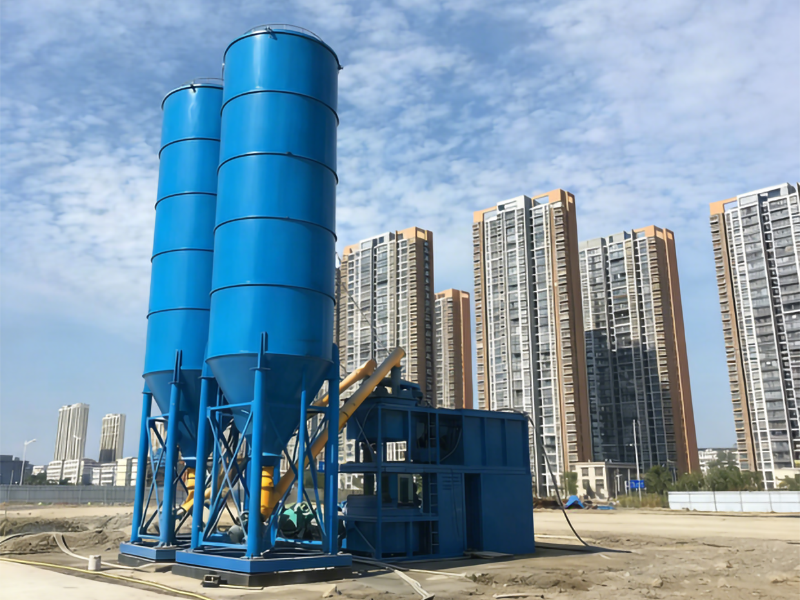
Procurement Notes Before the First RFQ
Put the mix-control requirement near the top of the inquiry. The supplier needs to know how many liquid admixtures are used, whether any powder additive is part of the process, how often the recipe changes, and whether the operator must switch between production modes during one shift. For the plant that runs this recipe, see the AGP-V60 plant for ground improvement.
A practical request for a cement grout plant with 4-5 admixture dosing should include the target grout output, water-cement ratio range, admixture names or functions, dosing tolerance, tank refill method, and whether batch records must show each component separately.
The plant should be reviewed as a full cement grout production system. Cement supply, water dosing, admixture metering, high-shear mixing, agitation, discharge, pump interface, cleaning access, and record output all affect whether the dosing package works in the field.
Where Dosing Problems Usually Start
The first source of trouble is incomplete mix information. Buyers may know the job method but not the final recipe, or they may know the recipe but not the expected shift rhythm. Eizoo can still discuss a working range, but the proposal is stronger when the uncertainty is named openly.
The second source is feed timing. If cement, water, and admixtures arrive at the mixer out of step, the operator may see uneven slurry behavior even though each individual component looks correct. For controlled foundation grouting, timing can matter as much as tank count.
The third source is cleaning. Admixture lines, valves, pumps, and mixer surfaces need clear flushing access. A compact layout that hides those points may look tidy on paper and still create avoidable downtime after cement slurry starts to set.
Records That Help Site Teams Defend the Mix
Many contractors now ask for pressure, flow, recipe, W/C ratio, and batch data before they compare price. Those records help the site team check whether the planned recipe was selected, whether output changed during production, and whether a later dispute is about mixing, pumping, or downstream work.
For a PLC-based grout batching system, buyers should ask what appears on the operator screen, what is stored in the record, and what can be printed or exported. A simple report that crews use every day is better than a complex report that nobody checks. For the wider plant range, see the AGP-C30 mobile grout plant.
The record does not replace laboratory testing or project inspection. It gives the contractor a clearer production history, which is useful during shift handover, client review, troubleshooting, and repeat quotations on similar work. Buyers who ask about admixture dosing usually raise it with a China grout plant manufacturer first, because the tolerance data settles most of the argument.
Selection Checks Before Quotation
| Buyer question | What to confirm | Why it affects the plant |
|---|---|---|
| Admixture count | Confirm 4-5 component channels, liquid or powder form, refill plan, and dosing tolerance | The number changes tanks, pumps, valves, software fields, and cleaning access. |
| Recipe changes | Send expected recipe names, W/C ratio ranges, and shift-change habits | Recipe management affects operator workflow and batch records. |
| Cement supply | State whether cement arrives by bags, silo, screw conveyor, or another bulk feed path | Dosing accuracy is only useful if cement feeding is steady. |
| Record format | Ask for pressure, flow, W/C ratio, recipe, and batch printout details | The control package should be fixed before production starts. |
| Cleaning plan | Confirm flushing points, valve access, mixer access, and daily maintenance routine | Small cleaning blind spots become large stoppages in cement slurry work. |
What to Send to Eizoo
Send the project method, target hourly output, grout ratio or binder requirement, cement supply method, admixture count, site restrictions, power supply, downstream equipment, cleaning expectations, and record format. Mention multi-component grout batching, cement grout recipe management, and PLC-based grout batching system only when they are required by the actual job.
Frequently asked questions
Do I need 4-5 admixture dosing for every grout project?
No. It is useful when the project uses several additives, changes recipes often, or needs clearer batch traceability. Simpler work may only need fewer channels.
What information should I send before asking for a dosing quotation?
Send grout recipes, W/C ratio range, additive type, dosing tolerance, target output, cement supply method, pump or rig connection, power supply, and record requirements.
Can admixture dosing be tied to recipe management?
Yes. The point of recipe management is to help the operator select the right mix and keep each component tied to the correct batch record. For the feed and storage side, see the SC/G digital screw conveyor.
Why do pressure and flow records matter if the article is about dosing?
They help the site team connect the recipe to actual production behavior. If flow or pressure changes, the record gives the crew a better starting point for troubleshooting.
Should the buyer specify the exact tank layout?
Usually the buyer should specify the recipe, site limits, refill method, and service access. Eizoo can then propose a tank and dosing layout that fits the job.
For a clearer quotation, send the works the site drawing, production rhythm, material route, and record requirement before final model selection. The first reply can then focus on a plant configuration that fits the job instead of collecting the missing basics. Buyers who ask about admixture dosing usually raise it with a China grout plant manufacturer first, because the tolerance data settles most of the argument.
Buyers should keep the discussion close to the method. Foundation grouting, SMW, TRD, CSM, DCM support, jet grouting support, and soil stabilization do not create the same duty cycle. The plant choice should follow the output rhythm, site restriction, material path, and record requirement for the job in front of the team.
The phrase multi-component grout batching should connect to a field decision. It may change tank count, control pages, conveyor sizing, operator checks, or daily cleaning work. If the phrase does not change the equipment conversation, it should not be forced into the quotation.
The same is true for cement grout recipe management. A buyer should ask where this function appears in the production chain, who checks it during the shift, and what happens when the job changes recipe, output, or connected equipment.
A practical layout review starts with a simple sketch. Mark cement or powder storage, water supply, admixture position, mixer location, pump route, discharge point, cleaning area, and operator access. That drawing often shows whether cement grout plant with 4-5 admixture dosing is mainly a control issue, a footprint issue, or a feeding issue. Sites comparing admixture dosing ask a grout plant supplier in China for the tolerance data first.
Output should be compared with the real work cycle. Some projects need steady production for long runs. Others need shorter batches, frequent cleaning, and fast movement between work areas. A plant that matches the average output but fails the shift pattern will disappoint the crew. Revisit the working notes on Automated grout plant with recipe management when the mix design changes.
Cement handling deserves early attention. Bag feeding can be acceptable for intermittent work, while bulk cement, horizontal silo storage, or screw conveyor cement feeding may be better for longer shifts. The right answer depends on delivery access, dust control, available labor, and how cleanly the site can recover powder.
Control details should stay readable. Operators need clear recipe names, dosing values, alarm messages, and record fields. A complicated screen that hides the next action can slow the site down, especially when the team is switching between mixes or dealing with a downstream interruption.
For QA/QC, PLC-based grout batching system should be discussed before price comparison. Records are easier to design into the plant than to add after the cabinet, instruments, and operator workflow are already fixed.
Cleaning access is a buyer issue, not only a maintenance issue. Cement slurry and dry powder both punish hidden corners. Valves, covers, conveyor transfer points, mixer surfaces, hoses, and discharge areas need enough room for the crew to clean and inspect them without improvising. Supervisors usually ask for admixture dosing checklist when the numbers stop matching the recipe.
If two proposals look similar, compare assumptions. One may include automated grout batching system, linked equipment review, start-up guidance, and record output. Another may leave those items open. The lower number may not be the lower-risk package once the site starts work.
A strong RFQ gives Eizoo enough information to challenge the first idea. Send the target hourly output, mix or binder data, cement delivery method, site drawing, power supply, connected pump or rig, record format, and any restriction around height, width, wind, indoor access, or marine exposure. The published guidance from the Deep Foundations Institute is worth reading alongside the site records.
The buyer should also explain what must not happen on site. Maybe the project cannot tolerate dust near an existing facility. Maybe the crew cannot stop for long cleaning windows. Maybe the client needs printed records after every batch. Those limits shape the plant more clearly than a broad model request.
When high-shear cement grout mixing is part of the topic, ask how it is measured, displayed, and maintained. A term on a specification sheet is only useful if the operator can see it and the maintenance team can keep it working. Keep the write-up on much automation does a cement grout with the site paperwork. Crews tend to look for admixture dosing causes before they touch the hardware.
When grout plant with pressure records appears in the requirement, ask whether it affects plant height, cement delivery, recipe handling, spare parts, or training. The supplier’s answer should be practical enough for the site supervisor, not only for procurement.
The final check is ordinary but important: can the crew operate, clean, inspect, and document the plant during a busy week without creating workarounds? If the answer is uncertain, the configuration still needs review before purchase.
Eizoo can help narrow the layout when the buyer shares the project method, available footprint, material route, output target, and record expectation. Those facts turn a general request into a workable equipment discussion.
The buyer should also think about commissioning time. A plant with more channels, more records, or a more complex feed path may need a longer start-up window than a plain mixer package. That is not a reason to avoid the feature. It is a reason to state the schedule before delivery.
Field crews notice small differences fast. If a valve is awkward, if a printer is hard to reach, or if the hopper is hard to wash, the crew will feel it by the end of the first week. Those are the kinds of details that separate a useful quotation from a brochure answer. New operators are given admixture dosing field notes in the first week.
When the job uses several mixes, the operator must move between them without losing confidence in the screen or the record. That is where multi-component grout batching or cement grout recipe management can become more than a phrase. The function has to help the person standing at the controls.
Transport matters too. A site that accepts one delivery route can handle a different plant than a site with a tight urban approach or a marine access constraint. The most attractive output number is still the wrong answer if the equipment cannot reach the working position safely.
A project that runs across multiple shifts should ask who reviews the records after each handover. If the answer is unclear, the team may collect data that nobody uses. The system should be understandable enough that the supervisor can explain the shift without reconstructing the job from memory. For the configuration used on larger sites, see the grout plant engineering range.
Cement and powder systems also need sensible spare-part planning. Feed screws, seals, valves, sensors, and pump items are easier to manage when the initial order already reflects the actual site duty cycle. That is cheaper than trying to retrofit a service plan after the first stoppage. For projects working to a stated specification, the site file usually has to show EN 12715 grouting records.
If the contractor is comparing quotations, the plant layout should be judged on how quickly the team can understand it. A clear line of sight to the controls, a sensible service path, and a direct feeding route often matter more than a polished product image.
For a buyer who cares about records, the best question is simple: can the plant show what happened without making the operator fight the interface? If the answer is yes, the record package is probably close to what the job needs.
The site team should also think about cleaning water, washdown discharge, and where the dirt goes after the shift. Those practical points change how a plant is operated every day, yet they are often missing from the first inquiry.
If the job uses a horizon of repeated batches, consistency matters more than a single peak number. A plant that holds a stable pace for many hours is usually more useful than one that looks strong in a one-off test and then drifts under load.
In Eizoo terms, the discussion should always come back to what the machine must do in the field. PLC-based grout batching system and automated grout batching system are helpful only when they improve the actual work rhythm, the cleaning plan, or the report the client will see.
The last check before ordering is whether the buyer can describe the plant in one clean sentence. If the sentence includes output, feeding, records, and site limits, the quotation is usually ready for the next step. If it does not, more detail is still missing.
A small but important issue is training. Even a good layout becomes less useful when the crew does not know where the next step lives on the panel. Ask who trains the operator, how long commissioning should take, and what the handover includes. Open the page on First week on site for the record format used on site.
Some projects need a plant that can move between jobs. In that case, the buyer should ask how much the configuration changes when the site shifts, what stays fixed, and which parts can be reused. That question matters for mobile contractors and project fleets.
Buyers also benefit from naming the decision that will come after the quotation. If the next step is a layout review, a recipe review, or a transport review, Eizoo Machinery can shape the reply around that decision instead of scattering the answer across several unrelated points.
A good plant conversation should end with numbers the field team can use. Output, delivery method, voltage, pressure expectation, record type, and service route are easier to compare than broad promises. That is the level of detail that supports procurement without slowing the site down.
The stronger the first inquiry, the less the project depends on guesswork later. That is especially true when the plant is part of a longer production chain and the downstream equipment has its own timing, cleaning, and maintenance needs.
If the buyer is comparing options across more than one plant family, the question should stay consistent. Which layout is easier to feed, easier to clean, easier to document, and easier to keep running on the actual site? That framing usually leads to a better purchase decision.
The same logic helps when procurement and engineering are not in the same room. If the plant can be described clearly by both teams, fewer assumptions survive into the purchase order. That alone can save a cycle of revisions.
For the engineering team, a well-formed request is useful because it narrows the conversation before drawings and pricing start. The buyer gets a proposal tied to the job, not a generic answer copied from a catalog page.
A buyer who already knows the site limits should say them plainly. Height, width, access road, floor bearing, wind, indoor use, or marine exposure are not side notes. They are the conditions that decide whether one layout can work at all.
Sending the batch log, the calibration sheet, and the material certificates to the factory commissioning desk is what turns a symptom into a component list. Eizoo keeps the weighing and metering documentation with the plant, so the next enquiry starts from records rather than from memory.