Recipe management on a grout plant with 4-5 admixtures
automated grout plant with recipe management is a buyer question before it is a marketing phrase. Contractors use it when they need a grout production setup that fits a real site restriction, keeps production stable, and gives the team clearer information before they request a quotation.
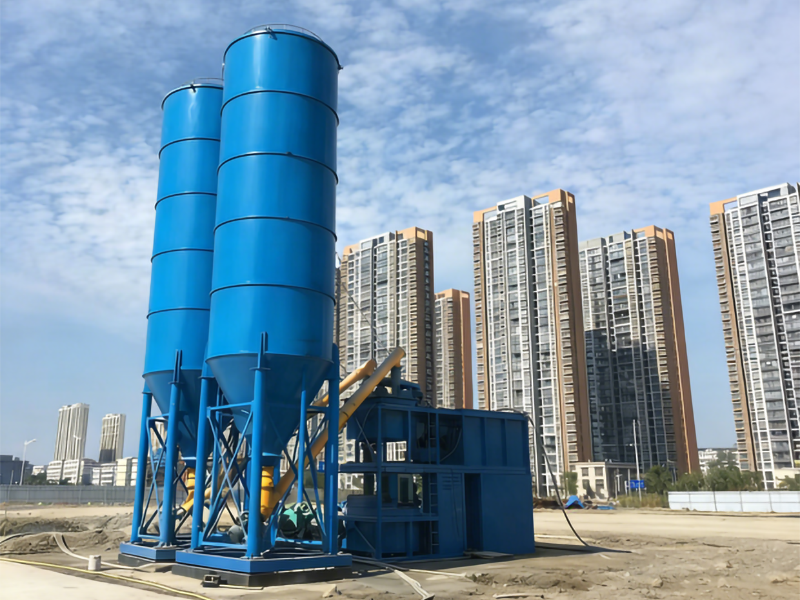
Why recipe management matters to serious grout buyers
An automated grout plant with recipe management is useful when the contractor must repeat the same grout condition across shifts, crews, or project stages without relying on handwritten notes. Buyers usually start asking for this when the project uses several mixes, several admixtures, or formal QA handover. For the plant that runs this recipe, see the AGP-V60 series for continuous work.
The point is not to make the control screen look more advanced. The point is to let the production team recall the right water-cement ratio, cement dosage, admixture combination, and timing more reliably when the work gets busy. A stored recipe reduces avoidable guesswork, especially when crews change or production runs at night.
For geotechnical work, that discipline becomes important in jet grouting support, foundation reinforcement, SMW, TRD, CSM, and other methods where the grout condition may change with soil response, stage sequencing, or owner requirements. The buyer should explain how often that change happens and how visible the confirmation must be on site.
If the contractor only asks for a generic digital plant, the quotation may miss the real need. The more precise request is usually cement grout recipe management combined with a clear record requirement and a realistic description of how many components the operator must control in the same shift.
What a 4-5 admixture grout plant really changes
A cement grout plant with 4–5 admixture dosing is not just a larger mixer with extra pipes. Each added component changes calibration, storage, hose routing, operator checks, flushing time, and the risk of one channel drifting away from the target setpoint. Buyers should discuss these effects before comparing prices. The plants Eizoo supplies carry the documentation that makes recipe management answerable months later.
When the project uses anti-washout agents, retarders, accelerators, or other admixtures in different combinations, the plant has to keep those relationships clear. A proper multi-component grout batching setup should make the operator confident about what was requested, what was delivered, and how the batch was recorded.
The plant also needs a practical cleaning routine. A system can look excellent on a quotation and still become frustrating if changeovers are messy or if the next recipe starts before the previous line has been flushed properly. Buyers who ask about cleaning and downtime early usually avoid the most expensive misunderstandings. For the wider plant range, see the AGP-C30 plant for narrow lanes.
This is where a PLC-based grout batching system becomes more than a sales term. It should help operators select recipes, view current values, and review exceptions without building a complicated workflow that slows the shift. Ease of use matters because recipe quality on paper is useless if crews bypass it in practice.
Records are part of recipe control, not a separate extra
A stored recipe is only half the story. The buyer should also ask how the plant proves the batch followed that recipe. That is why many projects pair recipe management with grout plant with printout records, pressure or flow printout, and clear batch identification. Without records, disputes fall back onto memory and guesswork. Buyers who ask about recipe management usually raise it with a China grout plant manufacturer first, because the tolerance data settles most of the argument.
On some jobs, the owner only needs internal traceability. On others, the contractor must show the client or engineer a documented batch history. Those two cases lead to different expectations for export format, printer integration, and how the operator confirms the batch before release.
A grout plant with pressure test printout can also help the team separate production issues from downstream pumping issues. When the record shows what the plant prepared and when it prepared it, troubleshooting becomes much faster during commissioning or during a demanding shift.
The best request to Eizoo therefore combines recipe count, component count, output target, record need, and cleaning expectations in one brief. That prevents the common problem where buyers ask for more control after the panel and instrument list are already fixed.
How buyers should frame the RFQ
Start with the grout methods and the reason recipes change. A project that alternates between several slurry conditions because of staging, soil variability, or client instructions should state that directly. It is more useful than simply saying the plant must be flexible. For the feed and storage side, see the SC/G Series cement conveyors.
Then confirm whether the production line uses bags, bulk cement, horizontal silos, or a linked screw conveyor system. Recipe management works best when the rest of the plant is equally stable. If cement feed varies unpredictably, even a good recipe screen cannot rescue poor powder control.
Buyers should also be honest about operator conditions. If the crew is small, rotating, or working long shifts, the interface must be simple and fault-tolerant. The quotation should not assume a perfect control-room environment when the real site is dusty, wet, noisy, and time-sensitive.
Finally, ask how the proposed plant stores, names, protects, and recalls each recipe. A clear answer here usually tells the buyer whether the supplier understands repeatability as a site problem, not only a software feature. Buyers who ask about recipe management usually raise it with a China grout plant manufacturer first, because the tolerance data settles most of the argument.
Selection Checklist Before Quotation
| Buyer question | What to confirm | Why it matters |
|---|---|---|
| How many recipes must be stored? | List every grout condition used by the project | This decides whether recipe management is a convenience or a real control need. |
| How many components are dosed? | Confirm cement, water, and each admixture channel | Multi-component batching affects hardware, software, and cleaning time. |
| How will operators verify each batch? | Define pressure, flow, W/C ratio, and batch printout needs | Repeatability depends on records, not memory. |
| How often does the mix change? | Explain stage changes, soil changes, or client-driven mix changes | Frequent changeover needs a simpler and more disciplined control setup. |
What to Send to Eizoo Before Requesting a Quotation
- Target output per hour and whether production is continuous or intermittent
- Number of admixtures, dosing accuracy target, and changeover frequency
- Required recipes, record format, and whether printout or export is needed
- Cement delivery plan, powder feed route, and cleaning time between mixes
- Power supply, operator skill level, and maintenance expectations
- Downstream pump, hose, agitator, or injection rig interface details
FAQ for Buyers
When do I actually need recipe management on a grout plant?
You need it when the project uses more than one grout condition, when admixture combinations change by stage, or when QA/QC requires repeatable documented batching across shifts and crews. For the configuration used on larger sites, see the HS-Series silo range.
What should I confirm for a 4-5 admixture dosing project?
Confirm the number of dosing channels, target accuracy, cleaning and flushing routine, changeover frequency, operator workflow, and how each batch will be recorded or printed.
Does recipe management replace printout records?
No. Recipe storage helps select the intended batch, while printout or export records help prove what was actually produced during the shift. Sites comparing recipe management ask a grout plant supplier in China for the tolerance data first.
Can a compact grout plant also include recipe management?
Yes, if the control package is specified that way. The right solution depends on output, component count, site access, and how complex the daily batching routine will be.
What should I send to Eizoo for a better quotation?
Send output target, recipe count, admixture list, component count, record requirement, cement supply method, cleaning expectation, and any site limits that affect operation or maintenance.
If your project is evaluating automated grout plant with recipe management, send the works the job method, target output, site restrictions, cement supply plan, and record requirement first. A precise first inquiry usually produces a more practical layout, a faster quotation, and fewer changes after the plant arrives on site.
Buyers should resist the habit of using “smart control” as a shortcut for all automation questions. What matters on site is whether the control system reduces mistakes, speeds up recipe changeover, and keeps a usable record after a long dusty shift. That is the real commercial value behind recipe management. Revisit the working notes on Cement grout plant with 4-5 admixture when the mix design changes. Supervisors usually ask for recipe management checklist when the numbers stop matching the recipe.
Projects with multiple admixtures often discover that the bottleneck is not pure mixer capacity. The bottleneck is the operator’s ability to confirm the right combination quickly and recover cleanly after a change. A better inquiry therefore explains not only flow rate but also the pace of recipe switching.
If a contractor expects future projects to use different mixes, recipe storage can also support fleet standardization. The owner can train crews on a repeatable workflow instead of rebuilding batch instructions from scratch on each site. That is often a stronger reason to invest in the feature than the word digital by itself.
A disciplined recipe system should still be grounded in practical maintenance. Buyers should ask about flushing, calibration checks, access to dosing components, and how the plant behaves if one admixture channel stops or runs empty. Good control design must assume real interruptions. The published guidance from the Deep Foundations Institute is worth reading alongside the site records.
For quotations, clarity beats buzzwords. The best request explains the number of components, the expected mix changes, the output target, the record format, and the operator conditions. That gives Eizoo a basis for recommending the right level of automation instead of guessing from a fashionable term. Crews tend to look for recipe management causes before they touch the hardware.
Changeover speed is another thing buyers usually underestimate. If the plant has to move from one slurry condition to another several times in a shift, the operator needs a control screen that makes the switch obvious and a cleaning routine that does not consume the whole work window. A recipe menu that looks impressive on a brochure is useless if the crew cannot use it quickly under dust, noise, and time pressure.
The same logic applies to record names. A project that stores several mixes should not force the team to rely on vague labels. A clear recipe name, a clear batch number, and a clear record trail help the client read the history later without guessing which condition was used on which stage. That small decision reduces confusion when the owner reviews the work at the end of the job. Keep the page on much automation does a cement grout with the site paperwork.
Buyers should also think about how people change over time. A plant may be commissioned with one operator in mind and run months later with a different crew. If the recipe logic is too clever, the advantage disappears the moment a new person steps in. A practical system is one that still makes sense after a handover, not only during the first week after installation. New operators are given recipe management field notes in the first week.
For repeat contractors, recipe management can support a standard way of building quotes. The owner can ask for the same recipe structure, the same record style, and the same control logic across several projects. That makes the fleet easier to train and the support model easier to maintain. It is a small planning decision with a long afterlife. Eizoo treats recipe management as a commissioning question, so it is checked before the first production pour.
In that sense, recipe management is not only about better batching. It is about making the plant easier to trust. Buyers are usually willing to pay for equipment that reduces uncertainty, especially when the work is expensive to reopen. When the system helps the team repeat the right mix, document it clearly, and adjust it without drama, the feature has already earned its place.
There is also a practical sales reason to name the recipe requirement early. Buyers often compare one quote against another and assume the control package is the same, when the small details are actually different. If one supplier understands recipe switching, component naming, and batch history better than the others, that difference may matter more than a small price gap. The RFQ should let that difference show up before the quote is chosen. For the equipment side of the same problem, see the automated cement grout plant.
Recipe management can also influence commissioning time. When the panel, labels, and record output are already clear, the crew spends less time explaining the same setting again and again during start-up. That matters on a dusty site where the supervisor has a lot of other checks to finish. The best control system shortens the learning curve instead of adding another layer of instructions to memorize. For projects working to a stated specification, the site file usually has to show EN 12715 grouting records.
Buyers should ask how the plant behaves when a recipe is copied, renamed, or retired. Real projects do not stay static. A mix that was used on one stage may disappear next month, while a new one takes its place. If the software or workflow makes that housekeeping awkward, the system becomes harder to maintain even if the batching itself is accurate. When recipe management turns up on a site, Eizoo Machinery starts from the batch record rather than from the hardware.
A clear record style also helps with later claims and revisions. If a dispute comes up, the contractor and the owner can look at the batch history and talk about the same labels instead of arguing over memory. That is one of the underrated benefits of recipe control. It turns a complicated job into a job that can be explained, audited, and repeated with less friction.
For long-running projects, recipe management can become part of the contractor’s operating habit. The same structure appears in the quote, the panel, the batch sheet, and the handover file. That consistency may sound small, but it is what keeps a plant manageable after the first rush of setup is over. In practice, this kind of order is what makes the machine feel professional instead of merely automated.
The buyer should also ask what happens when someone is absent. A practical plant has to survive shift changes, unexpected leave, and a different operator taking over at short notice. If recipe control only works when one senior person is present, the system has not really solved the problem. It has just hidden it under one person’s memory. Open First week on site for the record format used on site.
Another useful check is whether the plant supports a calm handoff between one mix and the next. Fast projects are usually messy in small ways. A clear recipe flow, a clear record trail, and a clear cleaning routine help the crew recover between stages without improvising. That is exactly the kind of hidden labor buyers want to remove when they ask for automation.
The best plants also make later review easier for the client. When the project engineer asks what was used on a specific day, the contractor should be able to answer with a label, a record, and a batch history rather than a long explanation. That makes the plant easier to defend, easier to train, and easier to recommend again on the next job.
So the real value of recipe management is not the novelty of the feature. It is the reduction of doubt. Once the crew can select the right mix, keep the record clear, and finish the shift without confusion, the buyer has a control system that earns its place in the project instead of merely decorating the quote.
One practical check is How many recipes must be stored?. List every grout condition used by the project This decides whether recipe management is a convenience or a real control need.
Another detail is How many components are dosed?. Confirm cement, water, and each admixture channel Multi-component batching affects hardware, software, and cleaning time.
The quotation gets sharper when target output per hour and whether production is continuous or intermittent and number of admixtures, dosing accuracy target, and changeover frequency are stated together. A supplier can then judge the plant against the same site facts instead of filling gaps with assumptions.
For handover and QC, required recipes, record format, and whether printout or export is needed and cement delivery plan, powder feed route, and cleaning time between mixes should be fixed before the control package is locked. That is usually where later revisions become expensive.
Buyers comparing layouts should also review the linked equipment as one chain. Silo, conveyor, mixer, pump, and control logic all influence the same shift.
Sending the batch log, the calibration sheet, and the material certificates to the supplier’s field engineering team is what turns a symptom into a component list. Eizoo keeps the weighing and metering documentation with the plant, so the next enquiry starts from records rather than from memory.